Skip to content

NEXT WORKING DAY DELIVERY - ORDER BEFORE 2.30PM

Main Navigation

Detailing Guide

How to Decontaminate
Your Car: The Complete Guide

Remove iron fallout, tar and bonded contamination step by step — so your wax and sealant bond to properly clean paint.

7 Min Read Duel Autocare Detailing Guide Published 17 July 2026

Short answer: Decontamination removes bonded contamination that washing leaves behind — iron fallout, tar and embedded particles — so wax and sealant can bond to clean paint. Wash first, then work through: iron fallout remover → tar remover → clay bar → panel wipe. Do it a few times a year, or whenever the paint feels rough.

Your car can look spotless after a wash and still feel rough to the touch. That's bonded contamination — iron fallout, tar and airborne particles that shampoo can't shift — and it's what sits between a good wash and a truly clean, smooth finish. This guide walks through the full decontamination process, step by step.

What is car decontamination?

Decontamination is the stage between washing and protecting, where you remove contamination that's chemically or physically bonded to the paint. It splits into two types:

  • Chemical decontamination — sprays that dissolve contamination: an iron fallout remover for embedded brake dust and a tar remover for road tar and glue.
  • Physical decontamination — a clay bar that pulls out anything still bonded to the surface.

Most cars benefit from both.

How to tell if your car needs decontaminating

After washing and drying, put your hand inside a thin plastic sandwich bag and glide it over the paint. Bonded contamination you can't see is easy to feel through the bag — if the surface feels rough, gritty or bumpy rather than glass-smooth, it needs decontaminating. Tar shows as dark specks on lower panels; iron fallout often shows as tiny orange-brown spots.

The decontamination process, step by step

1
Step
Wash and dry first
Start from a clean surface with a pre-wash and shampoo so decontamination products only deal with bonded contamination, not loose dirt.
2
Step
Remove iron fallout
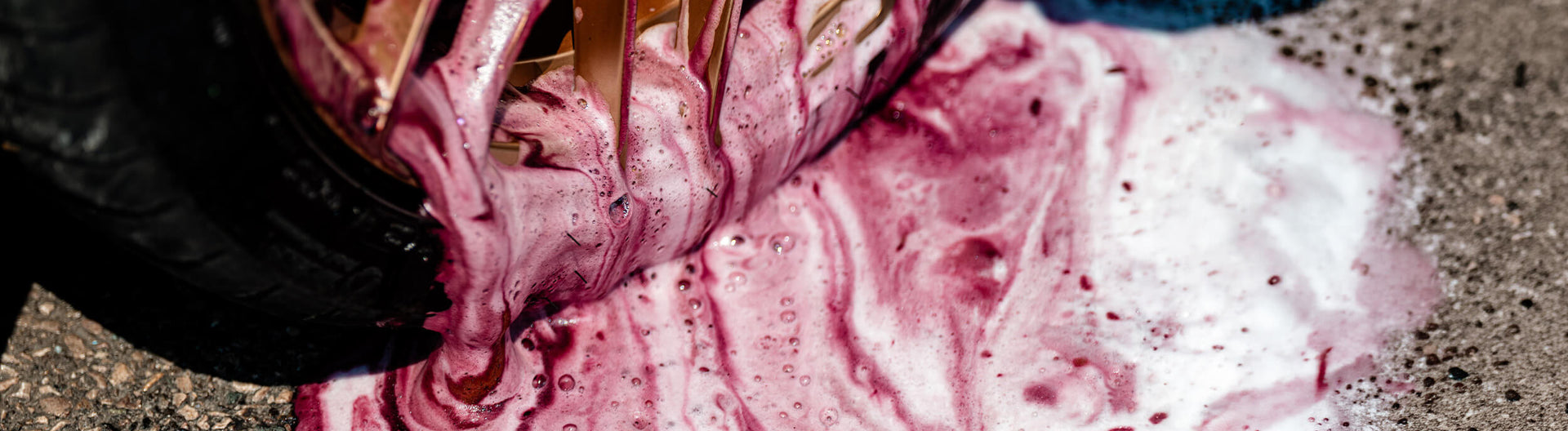
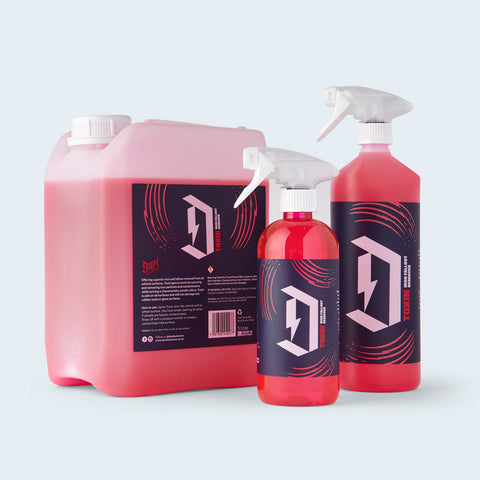
Spray Toxin Iron Fallout Remover onto wheels and paint; it turns red/purple as it reacts with and dissolves iron particles. Leave to dwell, then rinse thoroughly.
3
Step
Remove tar
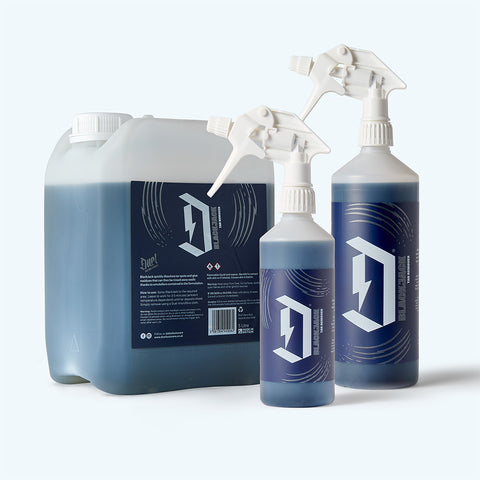
Treat lower panels and arches with BlackJack Tar & Glue Remover. Let it dwell to dissolve tar spots and adhesive, then wipe away with a clean cloth and rinse. For the full method — including what not to use and how to protect the paint afterwards — see how to remove tar from car paint.
4
Step
Clay the paint
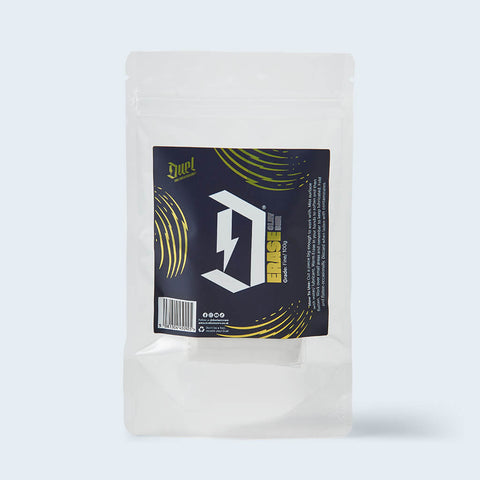
Glide an Erase Clay Bar over well-lubricated paint using light pressure and straight-line strokes. It lifts anything still bonded, leaving the paint glass-smooth.
5
Step
Panel wipe
Finish with a panel wipe to strip oils and clay lubricant residue from the paint, creating an ideal surface for protection to bond to.
6
Step
Protect
Apply your wax or sealant to properly clean, decontaminated paint. The surface is now as receptive as it can be to long-lasting protection.
Shop the Range

Want everything in one go? Shop the full decontamination range — iron fallout remover, tar remover and clay bar.
Toxin Iron Fallout Remover by Duel Autocare
Toxin Iron Fallout Remover
From £12.55
Turns red/purple on contact with iron contamination. Safe on paint, wheels and glass.
Shop Toxin →
BlackJack Tar and Glue Remover by Duel Autocare
BlackJack Tar & Glue Remover
From £11.45
Dissolves road tar, glue and sticky contamination from paintwork and wheel arches.
Shop BlackJack →
Erase Clay Bar Fine Grade by Duel Autocare
Erase Clay Bar Fine Grade
£8.95
Fine grade clay for regular maintenance decontamination. Leaves paint glass-smooth and ready to protect.
Shop Erase →

How often should you decontaminate?

For most cars, a full decontamination two or three times a year is plenty — typically spring and autumn, plus before any major protection work. Daily-driven cars, or those parked near industrial areas, railways or busy roads, pick up iron fallout faster and may need it more often. A well-maintained, regularly protected car needs it less.

Decontamination FAQs

How do I know if my car needs decontamination?
Do the bag test — glide your hand in a plastic bag over clean, dry paint. If it feels rough rather than smooth, there's bonded contamination to remove.
What's the difference between chemical and physical decontamination?
Chemical uses sprays (iron fallout and tar removers) to dissolve contamination; physical uses a clay bar to pull off what's left. Most full decons use both.
Do I need to clay bar if I use an iron fallout and tar remover?
Often yes — chemical removers dissolve iron and tar, but claying lifts other bonded particles they don't target. Together they leave the smoothest finish.
Will decontamination remove scratches?
No — it removes contamination, not defects. Scratches need paint correction or polishing.
Do you decontaminate before or after polishing?
Chemical and clay decontamination come before polishing; a panel wipe comes after polishing, to remove oils before protection.
Duel Autocare — Made in Britain

Ready to decontaminate?

Everything you need in one place — iron fallout remover, tar remover, clay bar and panel wipe.