



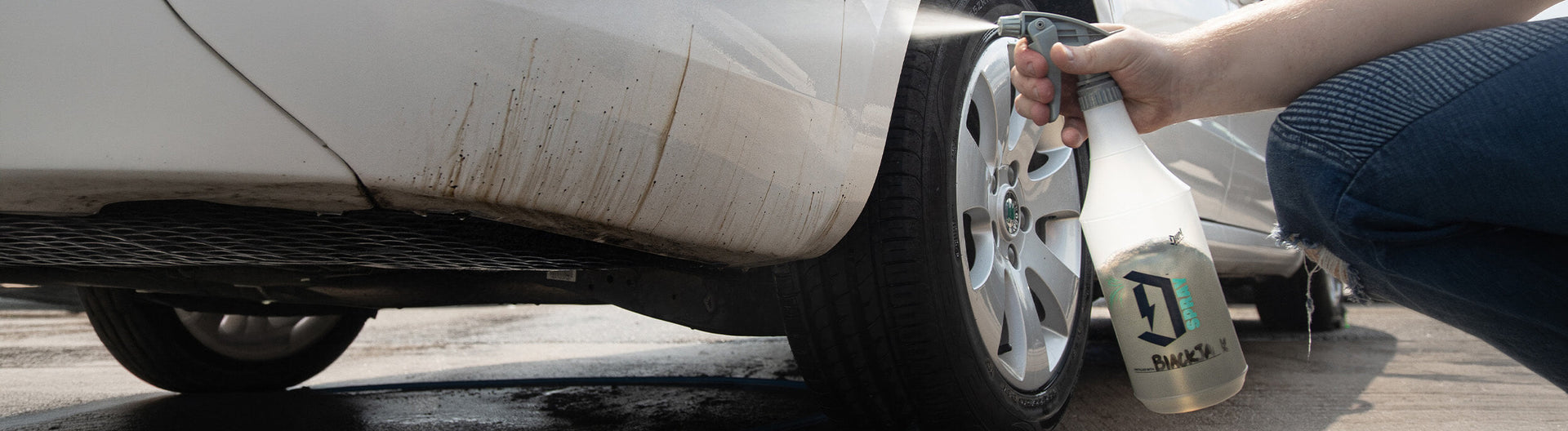
Tar bonds to the wax or sealant sitting on top of your paint, so the trick is dissolving that bond chemically rather than attacking it with friction — which is exactly how swirl marks and fine scratches happen. Below is the full five-step process, what to avoid, how to treat tyres and trim, and how to get your protection back afterwards.
Tar removal is one part of a wider decontamination routine — see our car decontamination guide for the full picture.
What you'll need
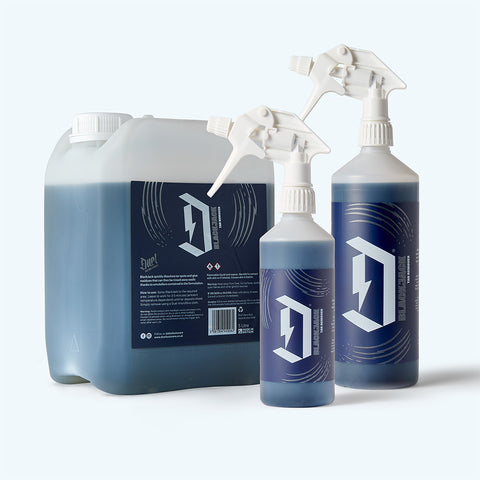
- A dedicated tar and glue remover — we use BlackJack
- Two clean microfibre towels: one for lifting the tar, one for a dry buff after
- A hose or bucket of clean water for a quick rinse
- Decent light so you can actually see what you're treating
- Nitrile gloves, which are resistant to the solvents in tar remover and keep it off your hands
How to remove tar from car paint: 5 steps
-
1StepWash the car firstDon't spray tar remover onto a dirty panel. Any loose grit sitting on the paint will grind into the surface the moment you wipe it, turning a tar spot into a scratch. Give the car a proper pre-wash and rinse first, so you're working on a clean, grit-free surface.
-
2StepTest in an inconspicuous spotTar and glue removers are safe on modern paint and wheels, but caution is needed on vintage paintwork, single-stage paint, or any panel that's had a smart repair. Pick a hidden area — inside the fuel flap or a lower sill — apply a small amount, and check the finish before treating the main area.
-
3StepSpray and let it dwellSpray BlackJack directly onto the tar deposit and leave it to work for 2–3 minutes, depending on the ambient temperature (cold days need a little longer). You'll see the tar start to bleed and loosen as the emulsifiers break the bond with the paint. Don't let the product dry on the panel, and avoid applying in direct sunlight. Keep it away from headlight covers and bare plastic trim.
-
4StepLift it away — don't scrubWipe the loosened tar away with a clean microfibre towel using light pressure in straight lines rather than circles. Turn the cloth to a clean face as soon as it starts picking up tar. If a spot won't shift, reapply the product rather than pressing harder — the chemical should do the work, not your wrist.
-
5StepRinse and reapply your protectionTar remover lifts wax, sealant or coating from the exact spot you treat, the same way it lifts the tar, so that patch is left bare afterwards. Rinse the area, dry it, and reapply your usual wax, sealant or quick detailer to that section so it matches the protection level of the rest of the panel.
Browse the full tar remover range →
What not to use to remove tar from your car
A few "free" fixes get recommended online. Here's why we'd skip them:
- WD40: it can loosen tar in a pinch, but it's not formulated for paintwork. It tends to strip more wax or sealant than necessary and isn't tested on plastic trim or coatings the way a dedicated remover is.
- Petrol or diesel: both will dissolve tar, but they strip protection far more aggressively than needed and carry real fire and skin-contact risks — not worth it for a tar spot.
- Nail polish remover or acetone: too harsh for clearcoat, and can leave the area dull or discoloured.
- Scrubbing with an abrasive pad or your fingernail: the single most common cause of swirl marks around old tar spots. Let the dwell time do the work instead.
| Method | Dwell time | Safe on trim / coatings | Risk |
|---|---|---|---|
| Dedicated tar & glue remover | 2–3 minutes | Yes, when spot-tested first | Low |
| WD40 | 10–30 minutes | No, strips wax/sealant beyond the spot | Medium |
| Petrol or diesel | Seconds to minutes | No, aggressive on all protection | High — flammable liquid |
How do you remove tar from car tyres and trim?
The same remover works on tyres — rubber isn't affected by it the way painted surfaces can be, so spray, let it dwell, and wipe. For plastic trim and headlight covers, apply the product to the cloth first rather than spraying directly, since overspray onto bare trim is exactly what the manufacturer warning is there to prevent.
Frequently asked questions
Can I use WD40 to remove tar from my car?
It can work as a one-off fix, but WD40 is a general-purpose penetrating oil rather than a paint-safe formula. It tends to strip more wax or sealant than necessary and isn't tested for plastic trim or coatings, so a dedicated tar and glue remover is the safer choice if you want to protect your finish.
Does petrol remove tar from a car?
It can dissolve tar, but petrol and diesel are far harsher than necessary, strip protection aggressively, and bring genuine fire and skin-contact risks. There's no reason to use either when a purpose-built remover does the job more safely.
How long should I leave tar remover on before wiping it off?
With BlackJack, two to three minutes is usually enough, depending on the ambient temperature — colder days can need a little longer. You'll see the tar deposits start to loosen and bleed before you wipe.
Will tar remover strip my wax or ceramic coating?
It will lift wax, sealant or coating from the exact spot you treat, the same way it lifts the tar, so reapply protection to that section afterwards. On older or single-stage paint, or anywhere that's had a smart repair, test an inconspicuous area first.
How do I remove tar from my car's tyres?
The same product works on tyres since rubber isn't affected by it the way wax or sealant is. Spray, let it dwell, and wipe. For nearby plastic trim, apply the remover to the cloth rather than spraying directly to avoid overspray.