



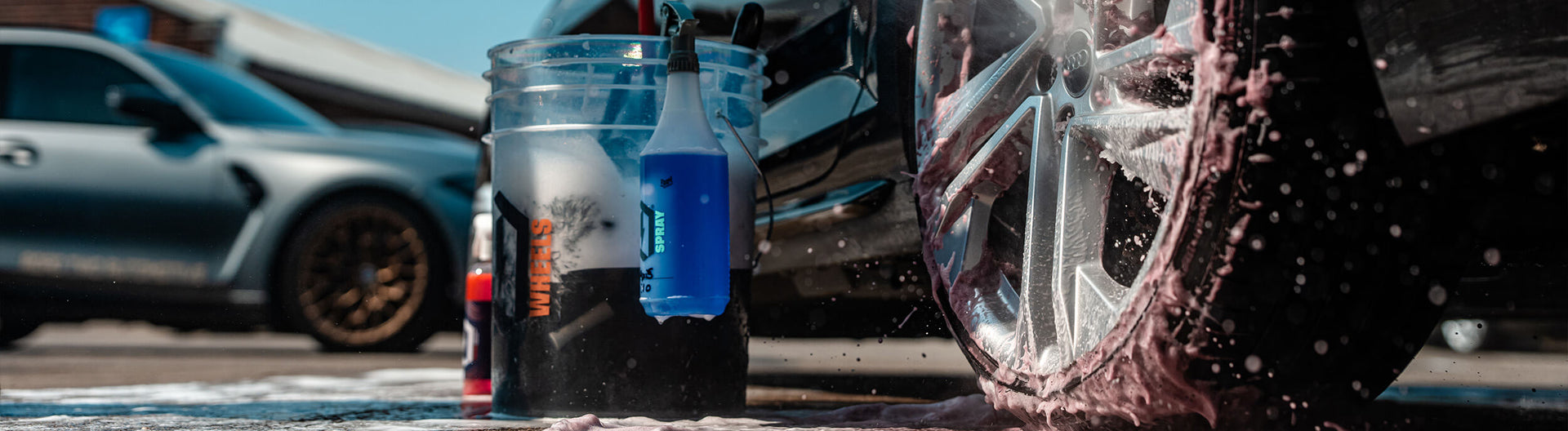
Cleaning alloy wheels properly takes more than a quick rinse. Brake dust, road grime, and iron fallout bond to wheel surfaces fast — particularly around spokes, inside barrel areas, and around brake callipers. Left untreated, contamination causes staining, pitting, and long-term damage to wheel finishes. A proper clean removes all of this without scratching or damaging the alloy.
What do you need to clean alloy wheels properly?
For a thorough wheel clean you need:
- A dedicated wheel cleaner, preferably acid-free
- A wheel woolie or spoke brush for reaching inside barrels and around spokes
- A softer detailing brush for painted or polished faces and delicate finishes
- An iron fallout remover for treating bonded brake dust contamination
- A pressure washer or strong hose for rinsing
- A separate bucket and wash mitt if cleaning the wheel face by hand
Using a separate bucket for wheels is important. Wheel cleaning generates dirty water and debris that you do not want on a mitt also being used on paintwork. Keep the wheel cleaning process entirely separate from the car wash stage.
How do you clean alloy wheels step by step?
Wheels should be cleaned before or at the very start of the car wash process. Working the wheels first means any overspray, dirty water, and grime dislodged from the barrels doesn't splash onto bodywork you've already cleaned.
How often should you clean alloy wheels?
Every one to two weeks for most cars driven regularly. Wheels accumulate brake dust and road grime faster than any other part of the car, and the longer contamination is left, the harder it becomes to remove without heavy agitation or repeated treatment.
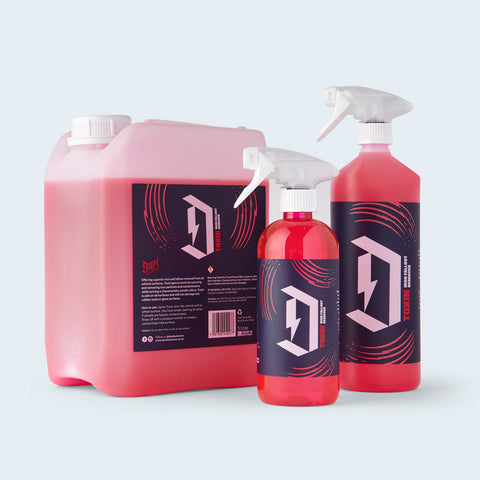
Iron fallout treatment with Toxin is worth doing every one to two months rather than every wash. It takes only a few minutes and removes the invisible layer of ferrous contamination that builds up between regular cleans. If you notice the wheels looking dull or feeling rough even after cleaning, iron fallout is usually the reason.
What should you avoid when cleaning alloy wheels?
Avoid acid-based wheel cleaners on sensitive finishes
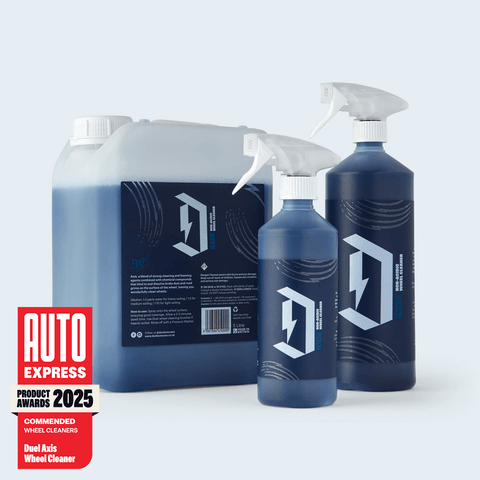
Acid wheel cleaners work fast but are not safe on all wheel types. Polished, bare aluminium, and some powder-coated finishes can be damaged by acidic products. An acid-free wheel cleaner like Axis is safe across all wheel types, removing the need to check compatibility each time.
Do not clean wheels when they are hot
Wheels heated by braking hold heat for longer than they may appear to. Applying wheel cleaner to a hot surface causes it to dry before it can work effectively, leaving residue that is difficult to remove. Allow wheels to cool for at least 20 to 30 minutes after driving before cleaning.
Do not use the same mitt you use on paintwork
Wheel cleaning generates heavily contaminated water and deposits grit onto your cleaning tools. Using that same mitt or sponge on the car body afterwards transfers grit directly onto the paintwork and causes scratching. Keep your wheel cleaning tools entirely separate.
Do not skip the rinse
Wheel cleaner left on a surface — even an acid-free formula — can leave residue marks if it dries. Always rinse completely and do not move on to the next wheel before rinsing the one you have just treated.
Browse wheel woolie brushes and spoke brushes — the right tool reaches every part of the wheel that a cloth can't.