Skip to content

NEXT WORKING DAY DELIVERY - ORDER BEFORE 2.30PM

Main Navigation

Detailing Guide

Vehicle Decontamination:
What It Is and How to Do It

Remove iron fallout, tar, and bonded contamination that washing leaves behind — so your protection actually bonds to clean paint.

8 Min Read Duel Autocare Detailing Guide Published 29 July 2026

Short answer: Vehicle decontamination removes bonded contamination — iron fallout from brake dust, road tar, and embedded particles — that washing alone cannot shift. Work through: iron fallout remover → tar remover → clay bar. Do it every three to six months, or before applying any wax or sealant. Skipping this step means protecting contaminated paint, which reduces the life of any protection you apply.

Even a freshly washed car can carry invisible layers of contamination. Iron fallout from brake dust, road tar, and embedded particles sit in the clear coat and build up quietly over time — causing the paint to feel rough, look dull, and become progressively harder to clean. Decontamination is what brings the paint back to a truly clean, smooth surface before any protection is applied.

Why does a car need decontamination if it's been washed?

Car shampoo is designed to remove loose dirt and surface grime. It isn't formulated to dissolve or dislodge contamination that has bonded to the clear coat — and it isn't aggressive enough to shift substances like road tar or iron particles that have become embedded in the paint surface.

The clearest way to check whether a car needs decontamination is to run a clean fingertip across a washed and dried panel. If the surface feels rough or gritty rather than smooth, contamination is present. A properly decontaminated paint surface should feel noticeably slicker and glassier to the touch. Most cars need decontamination every three to six months, regardless of how regularly they are washed.

What types of contamination does decontamination address?

Iron fallout and brake dust

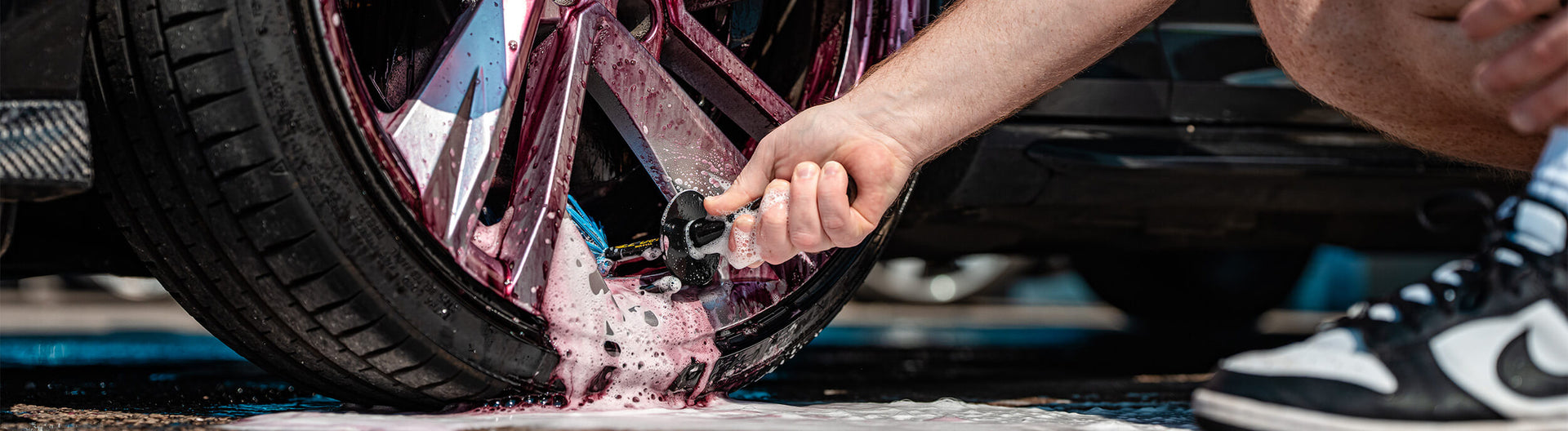
Brake dust is produced every time a vehicle brakes. Tiny metallic particles are released from the brake disc and pad, travel through the air, and embed themselves in the paint, wheels, and glass. Over time these oxidise, causing rust spots that gradually grow and stain the surface. Iron fallout is invisible to the eye on most paint colours but its effect is cumulative. An iron fallout remover reacts with ferrous particles, turning them purple and dissolving the bond so they can be rinsed away.

Road tar

Tar from road surfaces is picked up as spray and deposits on lower panels, sills, and wheel arches. It is a sticky, petroleum-based substance that bonds tenaciously to clear coat and is entirely resistant to car shampoo. A dedicated tar remover dissolves it chemically so it can be wiped or rinsed away without abrasive pressure.

Industrial fallout and environmental contamination

Cars parked near industrial areas, railways, or airports accumulate airborne metal particles that embed in the paint in the same way brake dust does. Tree sap, bird lime residue that has been partially cleaned, and water spotting from hard water can also bond to the surface and need chemical lifting before the paint can be considered truly clean.

Bonded surface particles

After chemical decontamination, microscopic particles can remain embedded in the clear coat. Running a clay bar across the surface physically lifts these out, leaving a smooth finish that protection products can bond to correctly.

How do you decontaminate a car step by step?

Decontamination always follows a full wash. Applying decontamination products to a dirty surface is ineffective and can spread contamination. Wash the car first, rinse thoroughly, then proceed through these steps while the paint is still wet or slightly damp.

1
Step
Iron fallout removal
Spray Toxin Iron Fallout Remover generously over all painted surfaces, wheels, and glass. Allow two to four minutes dwell time. You will see the product change colour — turning purple or red — where it is reacting with iron particles. Rinse off thoroughly with a pressure washer or hose. Do not allow it to dry on the paint, particularly in hot weather.
2
Step
Tar removal
Spray BlackJack Tar & Glue Remover onto affected areas — typically lower panels, sills, wheel arches, and behind door handles. Leave for two minutes to allow the solvent to break down the tar. Wipe away with a clean microfibre cloth using gentle pressure, then rinse. Repeat on any remaining deposits. Do not rub aggressively; the chemical does the work.
3
Step
Clay bar decontamination
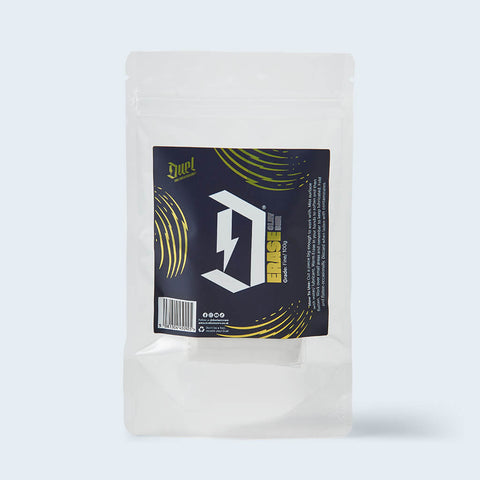
Once chemical decontamination is complete and the car has been rinsed, an Erase Clay Bar removes any remaining bonded particles. Flatten a piece of clay and work it across each panel using a clay lubricant or quick detailer to keep the surface slick. Use light, overlapping strokes and fold the clay regularly to expose a clean surface. The paint will feel noticeably smoother after each section.
Shop the Range

All three products together in one order — shop the full decontamination range: iron fallout remover, tar remover, and clay bar.
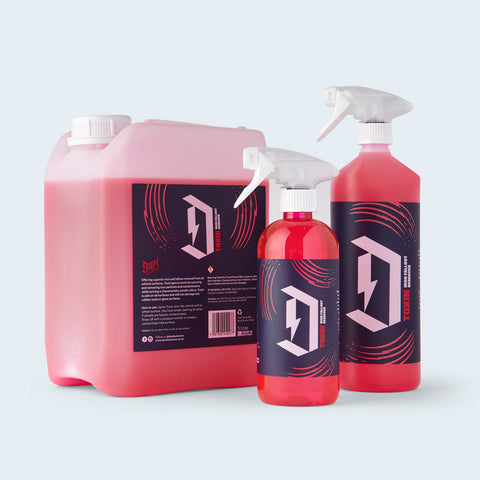
Toxin Iron Fallout Remover by Duel Autocare
Toxin Iron Fallout Remover
From £12.55
Ready to use. Works on paint, wheels, and glass. Reacts purple on contact with iron particles. Safe on all painted surfaces.
Shop Toxin →
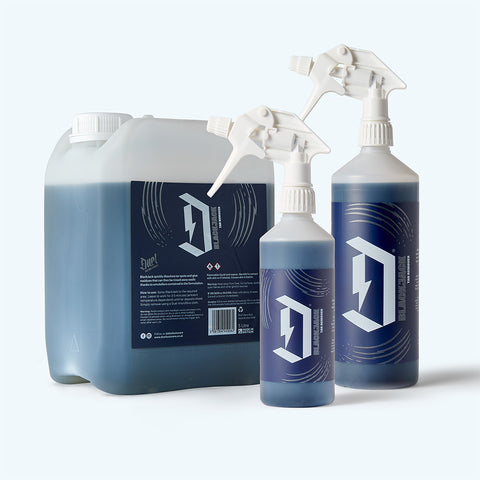
BlackJack Tar and Glue Remover by Duel Autocare
BlackJack Tar & Glue Remover
From £11.45
Dissolves road tar, glue, and sticky contamination from paintwork and wheel arches. No aggressive rubbing required.
Shop BlackJack →
Erase Clay Bar Fine Grade by Duel Autocare
Erase Clay Bar Fine Grade
£8.95
Fine grade clay for physical decontamination after chemical treatment. Leaves paint glass-smooth and ready to protect.
Shop Erase →

How often should you decontaminate?

Every three to six months is right for most cars driven regularly on UK roads. Cars driven in urban or industrial areas, or those that cover high mileage, may benefit from decontamination every two to three months because brake dust and fallout accumulate faster. Cars that are primarily used at weekends or garaged frequently can stretch to every six months.

A useful indicator is the fingertip test: run your fingers across a clean, dry panel after washing. If you can feel texture, it's time. If the surface is smooth, it can wait. Do not rely on visual inspection alone — contamination is often invisible until it reaches advanced stages.

Do you need to decontaminate before applying wax or sealant?

Yes — and this is one of the most commonly skipped steps in car care. Applying wax or sealant over contaminated paint seals the contamination in rather than protecting a clean surface. The protection bonds to the top layer of whatever is on the paint, which may include iron particles, tar residue, and embedded grit. The result is reduced durability and adhesion, and the contamination continues to work into the clear coat underneath the protective layer.

The correct order is always: wash → decontaminate → polish if needed → panel wipe → apply protection. Skipping decontamination makes every subsequent step less effective. For more on the overall detailing process, see the guide to what car detailing involves.

Vehicle Decontamination FAQs

Is iron fallout remover the same as a wheel cleaner?
No, though both are often used on wheels. An iron fallout remover targets ferrous iron particles specifically, reacting with and dissolving the bond they form with the surface. A wheel cleaner is a more general cleaning product designed to remove brake dust, grime, and road dirt from the wheel face. They serve different purposes and are ideally used together as part of a thorough wheel clean.
Can decontamination products damage paintwork?
When used correctly, no. Iron fallout removers and tar removers are formulated for automotive paint surfaces. The key rules are: do not let them dry on the surface, particularly in hot weather or direct sunlight, and rinse thoroughly after the recommended dwell time. Clay bars can cause light marring if used without adequate lubrication or dropped on the ground — always use a fresh piece of clay if it is dropped.
Do you have to use a clay bar every time you decontaminate?
No. Chemical decontamination with an iron fallout remover and tar remover is the routine step done every three to six months. A clay bar adds a further level of physical decontamination and is typically used once or twice a year, or specifically before a polish or coating application where the smoothest possible surface is needed.
Can you use iron fallout remover on alloy wheels?
Yes. Toxin is safe on painted and lacquered alloy wheels, as well as on paint, glass, and most other vehicle surfaces. Avoid using it on raw or uncoated metals and always check the label before use on unusual finishes.
What happens if you skip decontamination before waxing?
The wax or sealant bonds to the contaminated surface rather than to clean paint. Durability is reduced because the product cannot adhere correctly. More importantly, the contamination continues to work into the clear coat underneath the wax layer, and you won't notice until the wax wears off and the damage is more advanced.
Duel Autocare — Made in Britain

Ready to properly decontaminate?

Iron fallout remover, tar remover, and clay bar — everything for a complete chemical and physical decontamination.