



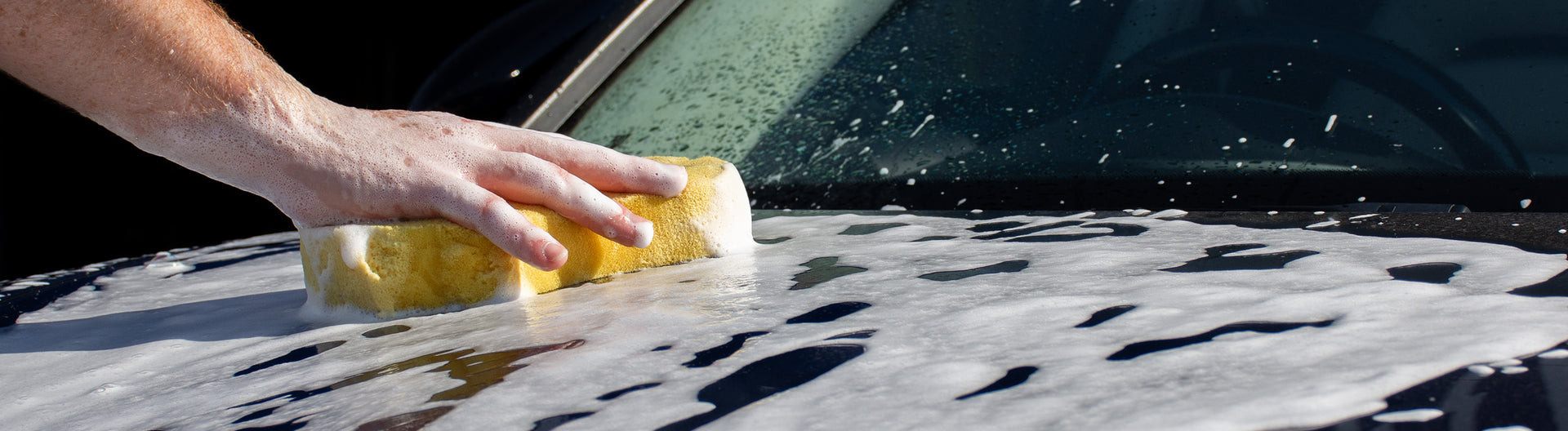
For decades, washing a car with a sponge was considered completely normal.
In fact, many people still keep a sponge in the garage or boot and use it every time they wash their vehicle.
The problem? A sponge is one of the worst tools you can use on modern automotive paintwork.
If you've ever wondered where swirl marks, fine scratches and dull paint come from, your washing method is often the answer.
In this guide, we'll explain why sponges cause damage, what you should use instead, and how a few simple changes can dramatically improve the way you wash your car.
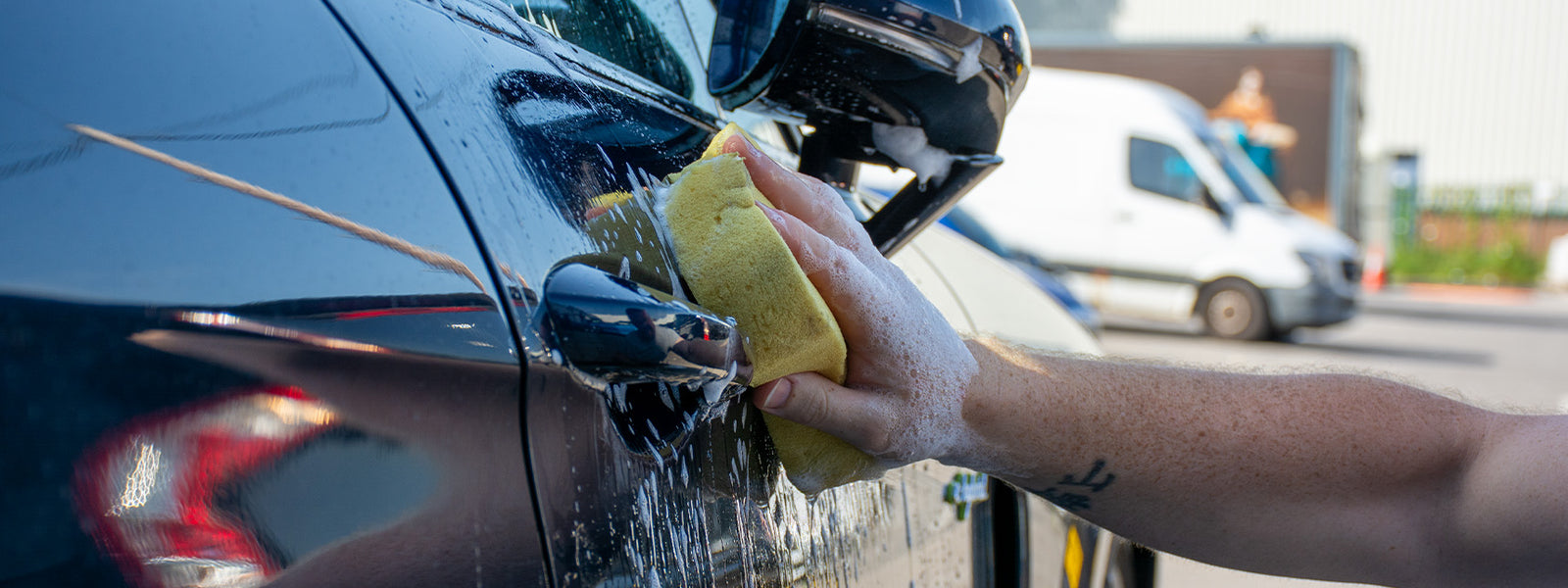
Most paint damage doesn't happen on the road — it happens in the driveway, during the weekly wash.
Suggested: lifestyle photo of a sponge being used on a car door panel, wide crop
What Is Wrong With Using A Sponge?
At first glance, a sponge seems ideal. It holds water, holds shampoo and feels soft in the hand. So what's the problem?
The issue is what happens when the sponge touches dirt.
Unlike a quality wash mitt, a sponge has very little depth within its surface. When dirt is picked up, it often stays trapped between the sponge and the paintwork.
As you continue washing, that dirt is dragged across the surface. Effectively, you're rubbing contamination against your paint.
A wash mitt pulls contamination away from the paint and up into its fibres. A sponge keeps it trapped at the surface and pushes it across. That distinction, repeated every wash, is the difference between pristine paintwork and a dull, scratched finish.
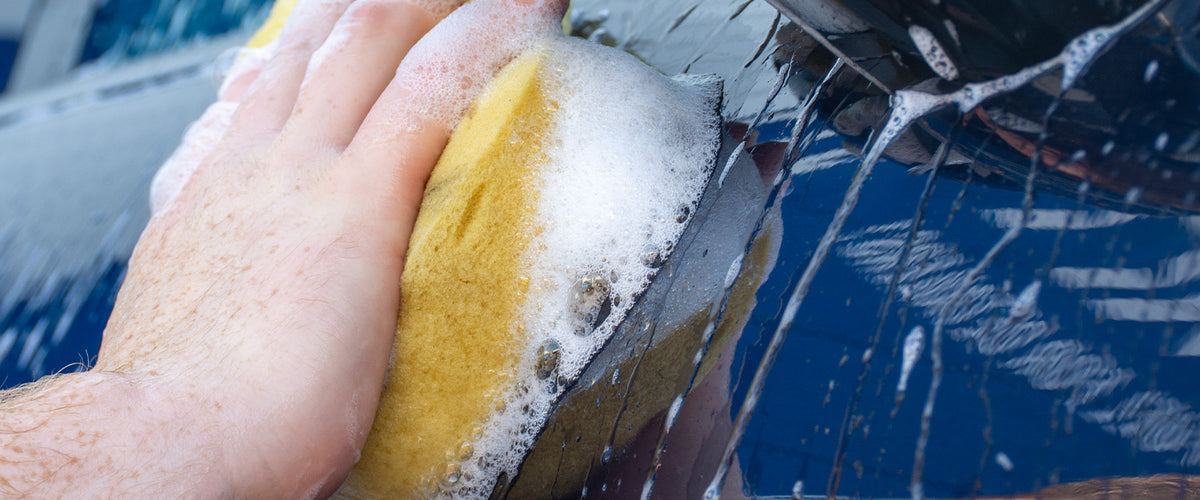
Close-up of a sponge on dark paintwork — surface contamination clearly visible.
Suggested: close-up of a sponge against a dark painted panel, dirty or flat surface visible
Why Paint Gets Scratched During Washing
Most people assume scratches happen while driving. In reality, a huge amount of paint damage happens during washing.
Road dirt contains sand, grit, brake dust, road salt and tiny metal particles. When these particles become trapped in a sponge, they act like fine abrasives.
Each time you move the sponge across the paintwork, you create tiny scratches. One wash won't ruin a car — but repeating the process week after week can gradually leave paintwork looking dull and tired.
What Are Swirl Marks?
Swirl marks are the fine scratches that become visible when sunlight or bright lighting hits the paint. They often appear as circular scratches, spider web patterns, hazy paint or a general loss of gloss. Many people blame poor paint quality when they see swirl marks — the reality is that washing methods are usually the biggest cause.
Swirl marks are often difficult to see until you're standing under petrol station lights, bright sunlight, or a detailing inspection light. Many people only notice them once they're already there — and by then, polish or machine correction is needed to remove them.
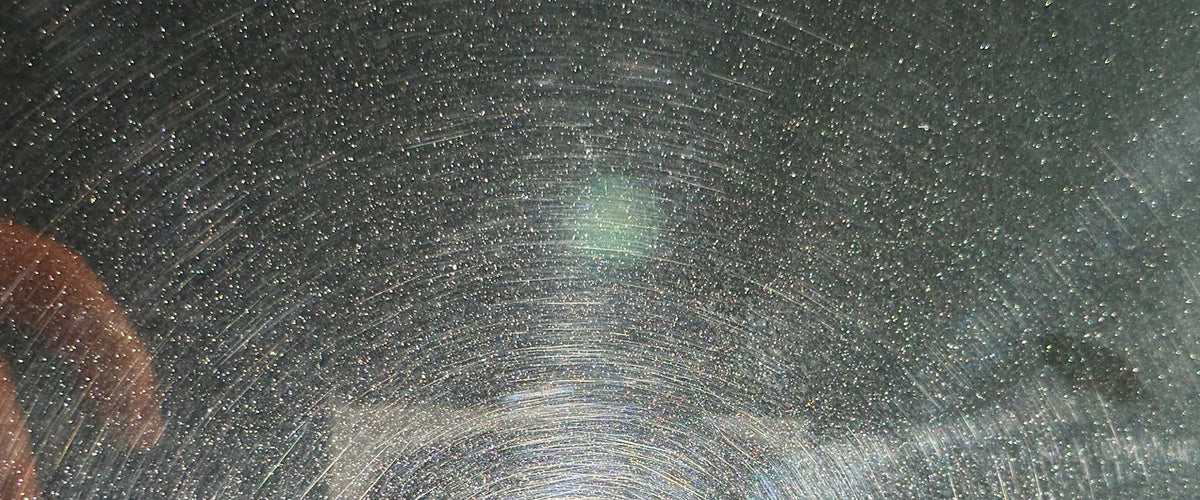
Swirl marks visible on dark paint under direct light — the result of repeated sponge washing.
Suggested: close-up of swirl marks on dark paint under direct lighting
Why A Wash Mitt Is Safer
A quality microfibre wash mitt is designed completely differently to a sponge. Instead of keeping dirt on the surface, the long fibres pull contamination up into the mitt and away from the paint. This helps reduce friction and dramatically lowers the chance of scratching.
| Property | Kitchen Sponge | Microfibre Wash Mitt |
|---|---|---|
| Surface Depth | Shallow | Deep Fibres |
| Dirt Release | Poor | Excellent |
| Scratch Risk | High | Low |
| Lubrication | Low | High |
The goal of washing a car is not just to make it clean — it's to make it clean without causing damage.
Imagine This...
Think about wiping a muddy floor. Would you rather rub the mud around with a flat sponge, or lift the mud into a thick absorbent cloth?
The same principle applies when washing a car. The goal is to remove dirt safely — not push it around while it acts as an abrasive against your paint.
This is why professional detailers and enthusiasts almost exclusively use quality microfibre wash mitts. The deeper the fibre, the more contamination is lifted away from the panel and held safely inside the mitt.
Microfibre fibres are designed to trap and hold contamination. A sponge is designed to absorb liquid. For washing paintwork, you need a tool that removes dirt — not one that just holds water.
The Two Bucket Method
Even the best wash mitt needs the correct washing technique. The two bucket method is simple and makes a significant difference to how safely you wash your car.
- Filled with water and quality car shampoo
- Mitt is loaded here before each panel
- Shampoo provides lubrication for safe washing
- Grit guard sits at the bottom
- Filled with clean water only
- Mitt is rinsed here after each panel
- Releases contamination before reloading
- Grit guard keeps dirt settled at the bottom
After washing a panel, rinse the mitt in the rinse bucket to release the dirt, then reload it with shampoo from bucket one. This prevents contamination being carried around the vehicle from panel to panel.
Why Grit Guards Matter
A grit guard is a simple insert that sits at the bottom of your bucket. At first glance it doesn't look particularly exciting — but it performs an important job.
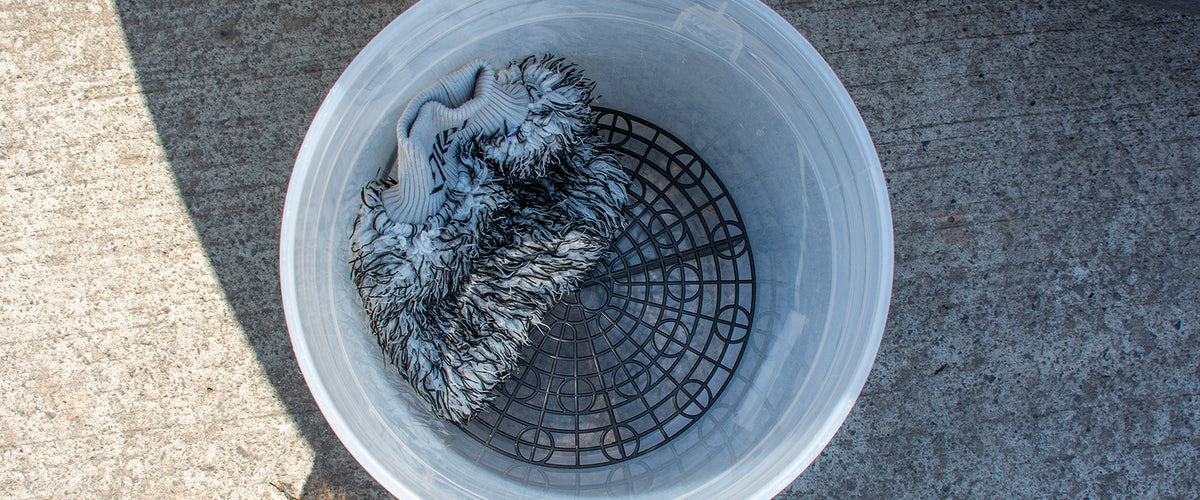
A grit guard separates contamination from the wash mitt — one of the most cost-effective upgrades in a beginner wash kit.
Suggested: grit guard at the base of a bucket, wash mitt being rinsed against it
As you wash your vehicle, dirt and contamination are removed from the paintwork and transferred into your wash mitt. When you rinse the mitt in your bucket, that contamination is released into the water. Without a grit guard, every time you place your wash mitt back into the bucket, you risk picking some of that contamination back up again.
How A Grit Guard Works
- Dirt released into bucket water when mitt is rinsed
- Contamination stays suspended in wash water
- Mitt picks up grit particles again on next dip
- Those particles are carried back to the paintwork
- Risk of scratching and swirl marks remains high
- Dirt falls through the grit guard when the mitt is rubbed against it
- Contamination settles at the bottom below the guard
- Guard prevents settled dirt being stirred back up
- Mitt picks up cleaner water each time
- Significantly less contamination returned to the paint
The dirt you can see is not usually the problem. The danger comes from the tiny particles you cannot see — fine sand, brake dust and road contamination. These are the particles that cause the most damage when dragged across paintwork. Anything that helps keep those particles away from your wash mitt reduces the risk of damage.
Use one grit guard in each bucket — including the rinse bucket. They're inexpensive and make a real difference to how clean your wash water remains throughout the process.
"But I've Used A Sponge For Years"
You certainly can. Many people have. But modern paintwork is softer than many people realise, and the effects of sponge washing usually build up slowly over months and years rather than appearing overnight.
A car washed with a sponge once won't look dramatically different the next day. But after dozens or hundreds of washes, the accumulation of fine scratches and swirl marks can leave the paintwork looking noticeably duller, hazier and less glossy than it once did.
Many vehicles that "need polishing" simply need safer washing methods going forward. The swirl marks are already there — polishing can correct them, but switching to a wash mitt, two buckets and grit guards will stop new ones forming.
What To Expect After Switching
Once you switch to a quality wash mitt and the two bucket method, you're not immediately removing existing swirl marks — that requires polishing or machine correction. But you are stopping new ones from forming. Over time, with correct washing, the paint stays in much better condition between any future correction work.
Common Myths About Sponges
Let's address the most common things people say when they hear that sponges can damage paintwork.
The sponge material itself isn't the main issue — it's the contamination trapped between the sponge and the paint. Even the softest sponge becomes abrasive when it's dragging grit, brake dust or sand particles across a panel. The softness of the sponge is irrelevant once it's full of road dirt.
Swirl marks are often very difficult to see until you look at the paint under bright sunlight, petrol station lighting or a proper detailing inspection light. Most people only notice them once someone else points them out, or when they stand at the right angle in direct light. They're there — they're just not obvious until conditions are right.
Possibly — a sponge covers a panel quickly. But a wash mitt also covers panels quickly, and it does so without dragging contamination across the paint. The few extra minutes the two bucket method might take is negligible compared to the time and cost of having a car machine polished to remove accumulated swirl marks.
A Better Beginner Wash Routine
If you're currently using a sponge, upgrading your routine is straightforward. There are no complicated techniques — just a safer, more effective process.
Wheels carry the heaviest contamination including brake dust and road grime. Always clean them before the bodywork so contamination doesn't splash back onto clean panels.
A pre-wash (snow foam or a diluted all-purpose cleaner) applied to the bodywork helps loosen and lift heavy contamination before your mitt ever touches the paint. This is one of the most important steps beginners skip.
Rinse all pre-wash and loosened contamination from the vehicle before moving to the contact wash stage. The less dirt that remains on the paint before the mitt touches it, the safer the process becomes.
Work panel by panel from the top down. Rinse the mitt in the rinse bucket after each panel, then reload with shampoo. Never leave the mitt sitting in the shampoo bucket between panels.
Pat or blot the paint dry with a large, soft microfibre drying towel. Never rub in circular motions with an old bath towel — drying is just as important as washing when it comes to avoiding scratches.
That's the entire process. Five steps. No specialist skills required. Just safer washing habits that, over time, make a visible difference to the condition of your paintwork.
Beginner's Wash Kit Shopping List
If you're building your first proper wash kit, these five items should be your starting point. Used correctly, they'll do more to protect your paintwork than almost anything else you could buy.
These five accessories will do more to prevent scratches than most expensive detailing products ever will. Getting your wash process right is always the most important first step — better products help, but they can't compensate for dragging contamination across the paint with a sponge.
Frequently Asked Questions
Is it bad to wash a car with a sponge?
What should I use instead of a sponge to wash my car?
What are swirl marks?
Do grit guards really help when washing a car?
What is the safest way for a beginner to wash a car?
Final Thoughts
A sponge might seem like a harmless part of washing your car. Unfortunately, it is often responsible for many of the scratches and swirl marks people see in their paintwork — damage they assume happened on the road, but that actually happened in the driveway.
Switching from a sponge to a quality microfibre wash mitt, using the two bucket method and adding grit guards is one of the easiest and most effective upgrades any beginner can make. It doesn't require expensive products or specialist knowledge. It just requires the right tools and a simple process.
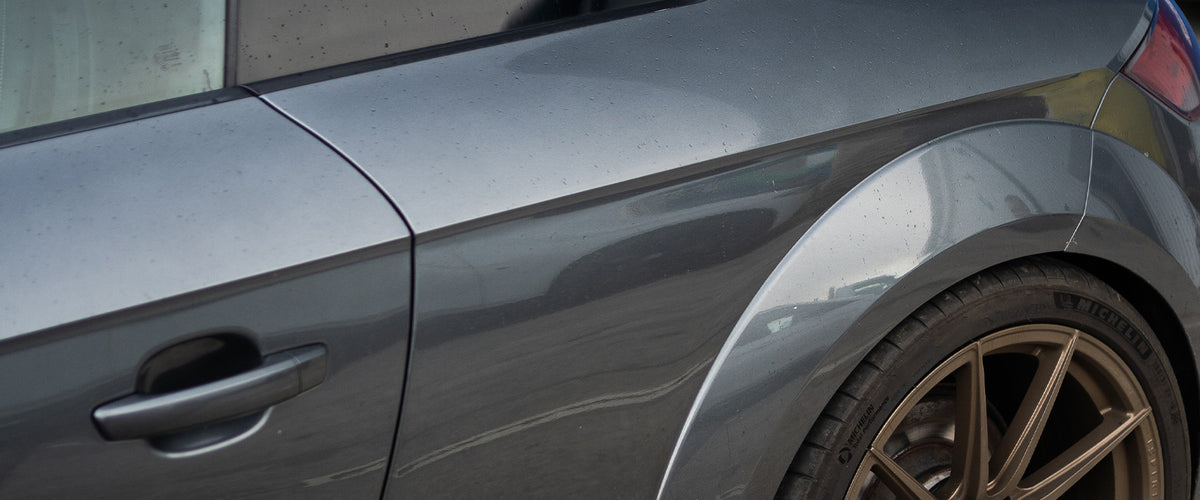
The result of washing correctly — not just cleaner, but genuinely safer for your paint every single time.
Suggested: finished clean car, deep gloss dark paint, panel detail or full side profile
Safer washing. Better results. Less damage — every single wash. Explore the Duel Autocare range — products formulated to work at their best when paired with the right wash process.
Recommended Next Reads
Learning the right techniques from the start will help you achieve better results, avoid unnecessary paint damage and keep your vehicle looking its best for years to come.