



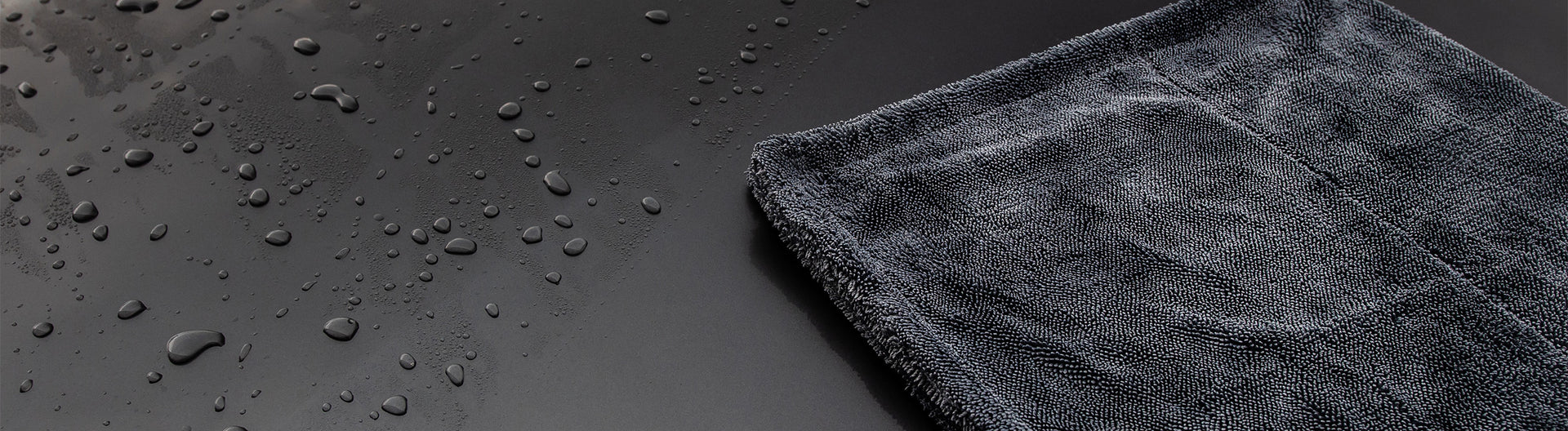
Most people spend time choosing the right shampoo, snow foam and wheel cleaner — part of a wider routine that also involves cleaning their wheels properly. Getting your dilution ratios right for these products matters. But none of it counts for much if you undo it all when drying.
Then they undo all that good work when it comes to drying the car.
It might sound surprising, but drying is one of the easiest ways to accidentally scratch your paintwork. Using the wrong towel, applying too much pressure or simply letting the car air dry can leave behind damage that's very difficult to remove later.
The good news is that drying your car properly is actually very simple. In this guide, we'll explain exactly how to do it safely, what to avoid, and how to achieve a clean, streak-free finish every time. If you're new to car care, our beginner car cleaning guide covers the full process from start to finish.

Why Drying Your Car Actually Matters
Many beginners focus entirely on the wash. But what happens after the rinse is just as important.
If water is left sitting on paintwork, it begins to evaporate — and everything dissolved within it stays behind. Tap water in the UK, especially in hard water areas, contains minerals and impurities that leave deposits on the paint surface as they dry out.
Most of the UK has moderately hard to very hard water. The higher the mineral content, the more likely water spots are to form — and the harder they become to remove once baked onto warm paint.
Drying your vehicle properly after every wash eliminates this risk entirely and leaves a significantly cleaner, clearer finish.
Why Air Drying Isn't A Good Idea
One of the most common beginner mistakes is allowing the vehicle to dry naturally after rinsing.
While it sounds harmless, air drying almost always leaves behind water spots and mineral deposits. As water evaporates, everything dissolved within it remains on the paint — minerals, salts and impurities from the tap water itself.
The result is a vehicle that looks less clean despite being freshly washed. On dark colours, this can be especially visible.
Once the rinse is done, drying should begin immediately. Every minute the water sits increases the chance of spots forming — especially on warm panels in direct sunlight.
Why Old Towels Should Never Be Used
Many people still reach for a bath towel, an old t-shirt or a chamois leather when drying their car. These products were never designed for modern automotive paintwork — and they cause problems the moment they touch a freshly washed surface.
Paintwork is at its most vulnerable immediately after washing. The act of drying — however gentle it feels — involves physical contact with the surface. Using the wrong material at that point can quickly create swirl marks and fine scratches that are only visible in direct sunlight. The same applies during washing itself — safe washing methods matter just as much as safe drying methods.
Most people spend time choosing the right shampoo and foam. Then they dry the car with whatever's to hand — and undo all of that work in under a minute.
What Should You Use Instead?
A Dedicated Drying Towel
A proper drying towel is specifically designed to absorb large volumes of water safely, with minimal friction and without leaving lint on the surface. Compared to household alternatives, the difference is significant. The same quality microfibre technology that makes wash mitts safer also makes dedicated drying towels far more effective than household alternatives.
What Is A Twisted Loop Drying Towel?
Twisted loop towels have become the go-to choice in detailing for a simple reason — they work exceptionally well. The twisted microfibre loops create a highly absorbent surface that holds a significant amount of water without becoming saturated quickly.
The key advantage is that the looped structure reduces the amount of direct contact between the towel and the paint. Less drag means less friction, which means a lower risk of scratching.
For beginners, a large twisted loop drying towel is one of the easiest single upgrades you can make to your detailing routine.

The Safest Way To Dry Your Car
Many people assume drying requires effort — scrubbing, pressing hard, working fast. It doesn't. In fact, the less pressure you apply, the better the result.
Pay particular attention to mirrors, door handles, badges, fuel filler caps and panel gaps — these areas hold water that often drips back onto panels you've already dried. A quick fold of the towel into these spots makes a big difference.
What About Drying A Black Car?
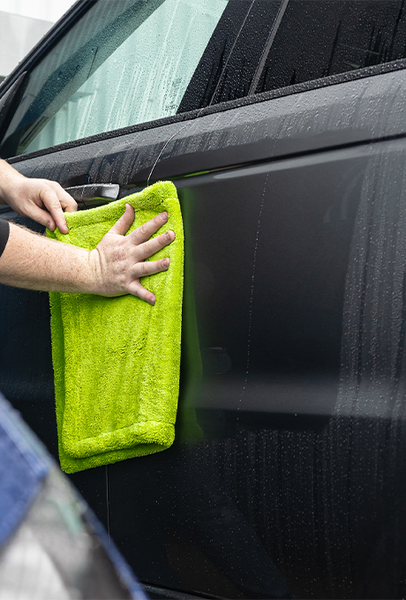
Black vehicles show defects more easily than any other colour. Swirl marks, water spots and streaks that would be invisible on white or silver become clearly visible on black paint in direct sunlight.
This makes drying technique especially important on dark vehicles. The safest approach is to ensure the wash itself is as clean as possible — the fewer contaminants on the paint during drying, the lower the risk of scratching.
Common Beginner Drying Mistakes
Most drying mistakes come down to three things: the wrong environment, the wrong technique, or the wrong towel. Here's what to watch out for.
Heat causes water to evaporate far faster than you can dry. This dramatically increases the chance of water spots forming before the towel reaches each panel. Whenever possible, wash and dry the vehicle in cooler conditions — early morning is ideal.
A quality drying towel should absorb water with little to no applied pressure. If you're pressing hard, the towel is either saturated or the wrong type. More pressure means more friction — and more friction means a higher risk of swirl marks. Wring the towel out and use light passes instead.
Even the best drying towel will cause damage if it carries contamination from a previous use. Always ensure your drying towel is freshly washed before use, and store it away from areas where it could pick up dust or grit.
If your drying towel touches the ground, treat it as contaminated. Grit and particles can become embedded in the fibres almost instantly. When in doubt, swap to a clean towel. One pass across the paint with a contaminated towel can create scratches that require machine polishing to remove.
Water hiding in door shuts, behind badges, around fuel caps and in boot seals will drip out minutes after you've finished drying — landing on panels you've already dried. Open every door, the boot and fuel flap, and give these areas a quick wipe before calling the vehicle done.
How To Look After Your Drying Towels
A good drying towel is an investment. Proper care keeps it performing well for much longer — and poor care can ruin it in just a few washes.
Store clean drying towels in a sealed bag or container away from dust, dirt and other workshop items. A towel left on the shelf picks up airborne particles just as easily as one dragged across the floor.
Do You Need More Than One Drying Towel?
For most vehicles, one quality drying towel is enough. For larger SUVs, vans or heavily coated vehicles, a second towel can be useful to ensure you're not working with a saturated cloth by the time you reach the lower panels.

A Simple Drying Routine For Beginners
After the rinse is done, this is all you need to do. No complicated steps. No special equipment beyond a quality drying towel.
Simple, Safe, Effective
Drying a car properly is one of the easiest ways to improve your detailing results. You don't need complicated techniques or expensive equipment.
What you need is straightforward: a quality drying towel, good washing habits, and a little patience. Avoid household towels. Avoid excessive pressure. Avoid letting the vehicle air dry.
Do those three things consistently and you'll dramatically reduce the chance of scratches, swirl marks and water spots — and your paintwork will show it. For a full picture of how every stage of the wash process fits together, read our complete car cleaning guide.
The wash removes the dirt. The drying stage determines the finish. Treat them with equal care and the results will speak for themselves.