



Can You Wash Your Car
During A Hosepipe Ban?
Yes — but not with a hosepipe, and not with a pressure washer either. Here are the 2026 UK rules in plain English, which areas are affected, and how to still get a proper finish.
Nine water companies now have hosepipe bans in force across England and Wales, covering roughly 27 million people. Thames Water has said its restrictions may not lift until the end of the year.
So the question thousands of people are typing into Google every week is a fair one: is washing your car now against the rules?
You can still wash your car. A hosepipe ban restricts the method, not the activity.
What's banned is using a hosepipe — or a pressure washer — connected to the mains. What's still perfectly legal is a bucket, a watering can, water collected in a water butt, or waterless cleaning products.
Below we cover exactly which areas are affected, what the rules actually say, whether commercial car washes are still open, who's exempt — and how to wash a car properly using about 40 litres of water instead of several hundred.
Which Areas Have A Hosepipe Ban In 2026?
As of 20 August 2026, nine water companies have a Temporary Use Ban in place. Between them they supply around 27 million customers — roughly two in five people in England and Wales.
| Water Company | Area Covered | Ban Started |
|---|---|---|
| South East Water | Kent, Sussex, Surrey, Hampshire, Berkshire | 3 July |
| Southern Water | Hampshire, Isle of Wight | 10 July |
| Anglian Water | East of England | 11 July |
| South West Water | Full supply area | 14 July |
| Affinity Water | Beds, Berks, Bucks, Essex, Herts, Surrey, parts of London | 17 July |
| Cambridge Water | Cambridgeshire, parts of Bedfordshire | 17 July |
| Welsh Water | Mid & south Ceredigion, parts of Pembrokeshire & Carmarthenshire | 19 July |
| Thames Water | Greater London, Luton, Thames Valley, Surrey, Gloucestershire, north Wiltshire, west Kent | 23 July |
| Wessex Water | Dorset, Somerset, Bristol, parts of Wiltshire, Gloucestershire, Hampshire | 18 August |
Bans are set by water company, not by council, and boundaries rarely match county lines — two houses on the same street can have different suppliers. Your supplier is named on your water bill, and every company publishes a postcode checker on its website. That page, not this one, is the authority on your address.
How Long Will The Ban Last?
None of the nine companies has committed to an end date. Thames Water has said its restrictions could remain in place until the end of 2026.
That's because bans aren't lifted on a schedule — they're lifted when reservoir and groundwater levels recover, and that needs sustained rainfall over weeks, not a wet weekend. Plan on this being a long one.
What You Can And Can't Do
A Temporary Use Ban is narrower than most people assume. It bans specific devices drawing on mains water. It does not ban cleaning your car.
A pressure washer is not a loophole. The legislation covers "a hosepipe or similar device" — and every water company running a ban has confirmed pressure washers are included when they're fed from the mains. If it plugs into your outside tap, it's covered.
The logic is simple once you see it. A running hosepipe moves an enormous volume of water in a very short time. A bucket physically cannot. The restriction targets flow rate, not the act of cleaning.
That gap is the whole point. Wash your car with two buckets and you're using less water than a single bath — while a neighbour with a hose running for twenty minutes has already used more than your entire wash.
A hosepipe ban doesn't stop you washing your car. It stops you doing it the wasteful way — which, if we're honest, was never the way that gave the best finish anyway.
Are Car Washes Still Open During A Hosepipe Ban?
Yes. Commercial car washes are exempt and continue to trade as normal. That includes hand car washes, automatic rollover washes, jet wash bays and mobile valeters.
The reason is straightforward: a Temporary Use Ban restricts domestic use of a hosepipe. A business using water to deliver a service is a commercial use, governed by its trade effluent and supply arrangements rather than by the domestic ban.
There's a common misconception that this is a loophole or unfair. In practice, most commercial washes recycle a large proportion of their water and use metered, high-pressure low-volume equipment — so a professional wash can genuinely use less fresh water per car than an unrestricted domestic hosepipe.
Some water companies have asked commercial customers to reduce non-essential use voluntarily, and a small number of jet wash operators have reduced hours. Exempt doesn't always mean unaffected — call ahead if you're driving out specially.
Who Is Exempt From The Hosepipe Ban?
Exemptions vary between the nine companies, but the following categories appear on most published lists. If you think one applies to you, check your supplier's own exemption page — several require you to register in advance rather than simply assume.
What Happens If You Break The Ban?
Breaching a Temporary Use Ban is an offence under the Water Industry Act 1991, and can carry a fine of up to £1,000 on summary conviction.
In practice, prosecutions are extremely rare. Water companies rely on warnings, letters and public reporting first, and enforcement is generally reserved for repeated and deliberate breaches. That said, "everyone else is doing it" has never been much of a defence, and reports from neighbours are the most common way breaches come to light.
How To Wash Your Car Properly Without A Hose
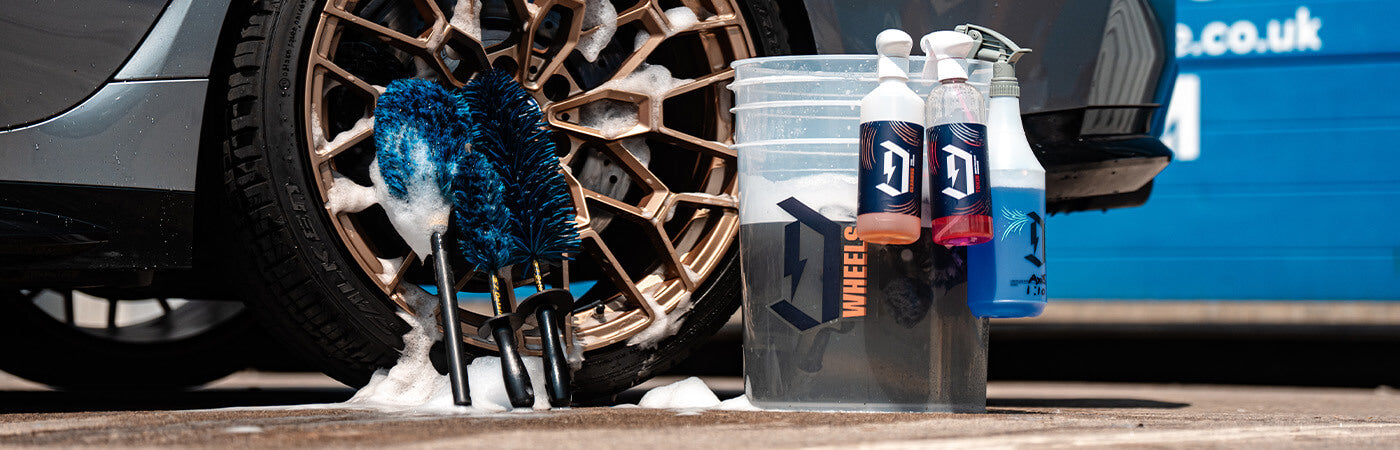
Here's the part most guides skip. Washing without a hose isn't a compromise you tolerate until it rains — done correctly, the two bucket method is genuinely safer for your paint than blasting it with a pressure washer and one bucket of increasingly filthy water.
The risk when you cut water use isn't using less water. It's the temptation to reuse dirty water and drag grit across the paint. Two buckets and two grit guards solve exactly that problem.
If you have a water butt, use it for the pre-rinse and the wheels and save your mains water for the final rinse. Rainwater is naturally soft — no dissolved minerals — which means significantly fewer water spots than tap water in hard water areas.
Can You Use Snow Foam Without A Pressure Washer?
Yes — and this is one of the most common questions we get during a ban. A foam lance needs a pressure washer, but snow foam itself doesn't.
A pump-action garden sprayer or a simple trigger-spray bottle will apply a pre-wash perfectly well from a bucket of water. The foam will be thinner and won't cling as dramatically, but the thick shaving-foam look was always mostly theatre. What actually loosens the dirt is chemical dwell time on the panel — and that works identically whether the product arrived via a lance or a spray bottle. Getting your dilution right matters more than the delivery method.
Keeping The Car Clean Between Washes
If a full wash is going to be a fortnightly job rather than a weekly one, the trick is stopping the car getting properly dirty in the first place.
Quick Detailer For Light Dust
A quick detailer spray and a clean microfibre will lift a light film of summer dust and pollen in about five minutes, using almost no water at all. On a car that's already protected, it also tops up gloss and beading as you go.
This is the part a lot of brands skate over during a hosepipe ban. A quick detailer, waterless wash or rinseless product is for a light layer of dust — nothing more. Wipe one across a car carrying road grit, sand or dried-on traffic film and you are dragging abrasive particles over your clearcoat. That is how swirl marks happen. If you can see or feel grit, it needs a proper wash first, and there is no spray on earth that changes that.
Our own rule of thumb: run a fingertip lightly across a lower panel. If it's smooth and only lightly dusty, a detailer is fine. If it feels gritty at all, get the buckets out — and if you're unsure, use the buckets. Repairing swirl marks costs far more than an extra 40 litres of water.
Protection Does The Heavy Lifting
A well-protected car stays cleaner for longer and releases dirt with far less agitation, which means less contact, less water and less risk every time you wash. If a long ban is ahead of you, a good sealant applied now is the highest-leverage thing you can do.
Hosepipe Ban Myths, Corrected
Five things we hear constantly during a ban — and what's actually true.
Hosepipe Ban & Car Washing FAQs
Can I wash my car during a hosepipe ban?
Can I use a pressure washer during a hosepipe ban?
Are car washes open during a hosepipe ban?
Can I wash my car with a bucket during a hosepipe ban?
Can I use water from a water butt?
What's the fine for breaking a hosepipe ban?
Are Blue Badge holders exempt?
How long will the 2026 hosepipe ban last?
Can I use snow foam without a pressure washer?
Can I rinse my driveway after washing the car?
Your Hosepipe Ban Wash Routine
Everything above, condensed. Pin this to the garage wall.
A Ban On The Hose, Not On Standards
The restrictions are real and they matter — reservoir levels across large parts of the country are genuinely low, and the bans exist for good reason. Following them properly is the right thing to do.
But there's no reason to spend the rest of 2026 driving a dirty car, and no reason to accept a worse finish. A bucket wash done with the right technique isn't a downgrade. Plenty of professional detailers have never used a hosepipe on a customer's car in their lives.
Use less water, take a bit more care, and you'll likely end up with better paint at the end of it than you started with.
You can't use the hose. You can use a bucket. The difference in water is enormous — the difference in results, if you do it properly, is in your favour.
This guide is general information, accurate as at 20 August 2026. Restrictions and exemptions differ between water companies and change at short notice. Always check your own supplier's website for the rules that apply to your address.
Less Water. Same Standards.
Buckets, grit guards, concentrated shampoos and quick detailers — made in Britain, and built for a wash that doesn't need a hosepipe.