



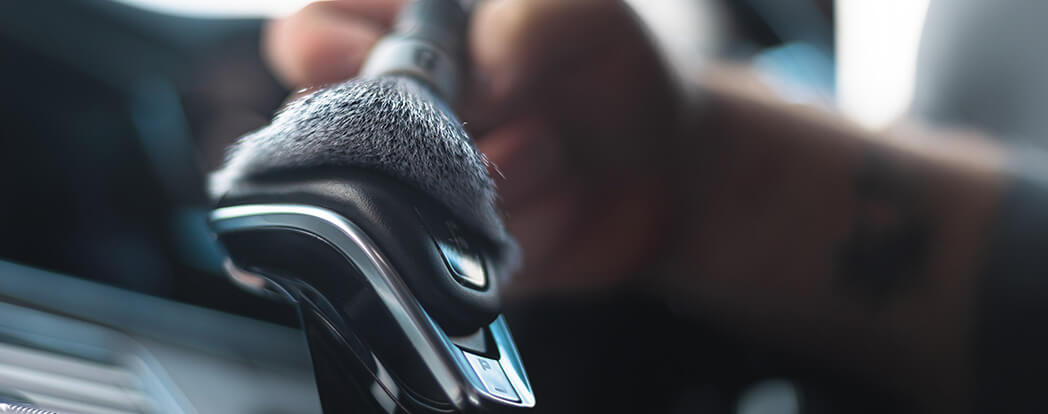
APC — All Purpose Cleaner — is one of the most versatile products in car detailing. Used correctly across plastics, rubber, engine bays, door shuts, wheel arches and interior surfaces, it can handle a huge range of jobs from a single bottle.
The problem is that APC is also one of the most commonly misused products in detailing. Many people assume stronger dilution automatically means better cleaning. Others use the same ratio for every task regardless of the surface or contamination level.
In reality, understanding how to dilute APC correctly is one of the simplest ways to improve cleaning performance while reducing risk and product waste. If you want a broader grounding first, read How Dilution Ratios Actually Work in Car Detailing.
Quick answer: APC (all-purpose cleaner) is typically diluted between 1:4 and 1:20 depending on the job. Use around 1:20 for interior plastics, 1:10 for door shuts and rubber mats, and 1:5 for engine bays and heavy grease. Start weaker and only strengthen if the surface needs it.
| Task | Starting dilution |
|---|---|
| Interior plastics | 1:20 |
| Door shuts / rubber mats | 1:10 |
| Engine bays / heavy grease | 1:5 |
What Is APC?
APC stands for All Purpose Cleaner. As the name suggests, it is designed to tackle a wide range of cleaning tasks across both vehicle interiors and exteriors. Unlike dedicated products designed for a single purpose, APC can often be adjusted through dilution to suit different jobs.
This flexibility is one of the reasons APC has become a staple product among both enthusiasts and professional detailers. A single bottle of APC — diluted correctly — can cover all of these tasks:
Dashboards, door cards and trims — adjust ratio based on how soiled the surface is.
Cuts through road grime and rubber contamination packed into door shut channels.
Use stronger concentrations on heavy grease and oil before rinsing thoroughly.
High-traffic surfaces that trap embedded dirt — a stronger dilution is often needed.
Packed-in road grime and brake dust — use near concentrate or full strength here.
A mid-range ratio covers most routine interior surfaces from a single dilution.
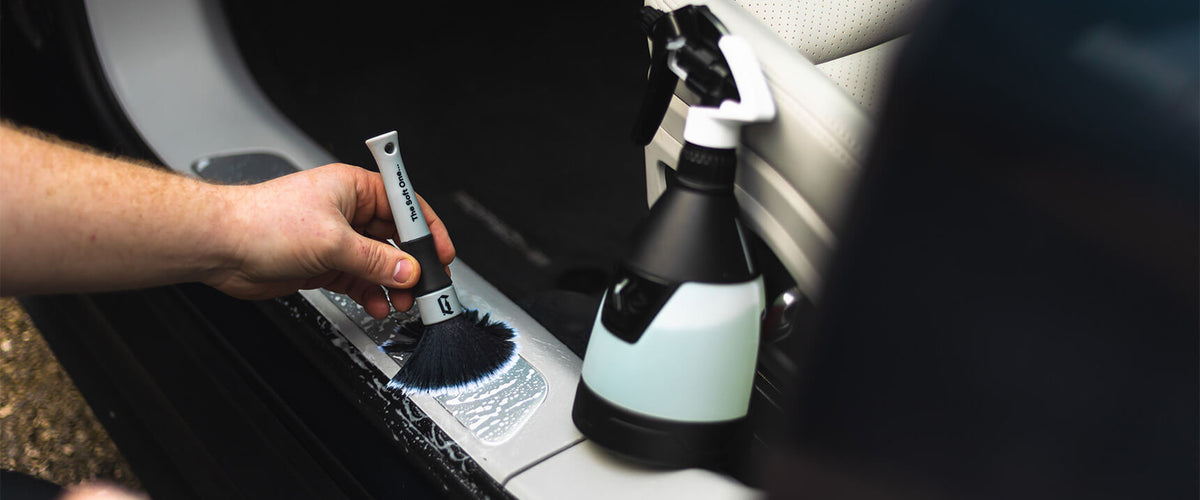
APC product being applied to an interior or engine bay surface
Why APC Dilution Matters
The dilution ratio you choose directly affects how APC performs — and the consequences of getting it wrong go beyond simple cleaning performance.
A stronger dilution may be suitable for heavily contaminated areas, while a weaker dilution is often more than capable of handling regular maintenance cleaning. Professional detailers rarely use one APC dilution for everything — they adjust the strength to suit the task.
Use the weakest effective dilution possible. If a surface can be cleaned safely at 1:20, there is little reason to use 1:5.
Using Maximum Strength for Every Job
This is probably the most common APC mistake. The assumption is simple but wrong:
"Stronger APC equals better cleaning." It is the first conclusion most people reach — and it causes unnecessary problems almost every time.
APC chemistry works best within a certain concentration range. Over-concentrating it wastes product, increases costs, leaves more residue, and increases risk on delicate materials — without meaningfully improving results.
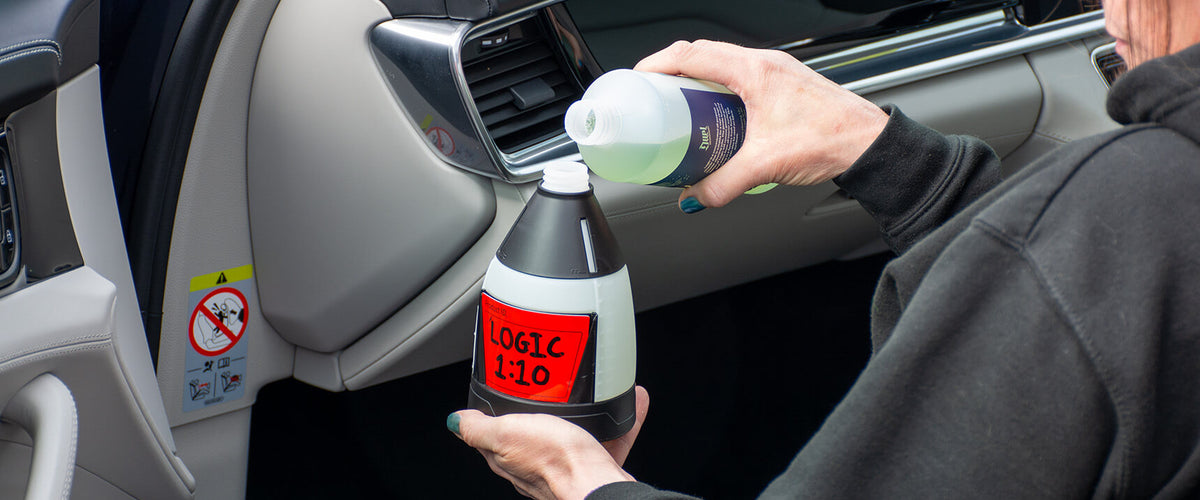
APC concentrate being measured into a dilution bottle
The strongest dilution is rarely the best dilution. Proper dilution matched to the task always outperforms blanket maximum strength.
Recommended APC Dilutions by Task
Every APC formula is different, so always follow manufacturer recommendations. These are sensible starting points for most detailing tasks — adjust based on contamination level and surface sensitivity.
A lighter dilution is all that is required for interior plastics. Weaker chemistry reduces the risk of fading or leaving residue on dashboards and trims. Test in an inconspicuous area first.
Door shuts accumulate grime, rubber residue and road contamination but rarely require aggressive chemistry. A mid-range dilution handles routine maintenance cleaning and light road grime with ease.
Rubber can tolerate slightly stronger dilutions than soft interior plastics. A 1:10 ratio handles dirt, salt residue and general contamination without damaging the rubber surface.
Grease, oil residue and accumulated grime require a stronger dilution to break down properly. Always avoid spraying directly onto sensitive electrical components — apply by brush or cloth instead.
Reserved for neglected areas, stubborn contamination and deep cleaning work. Use stronger dilutions only when genuinely required — not as a default. Rinse thoroughly and always test first.
Use our free Dilution Ratio Calculator to get exact product and water amounts for any ratio and bottle size.
Surface Sensitivity Matters
Different materials react differently to cleaning chemicals. Using a universal dilution across all surfaces is one of the most common ways to cause unnecessary damage or residue problems.
When in doubt, always test APC in an inconspicuous area first. This applies especially to interior surfaces, new materials, or anything that has not been cleaned with APC before.
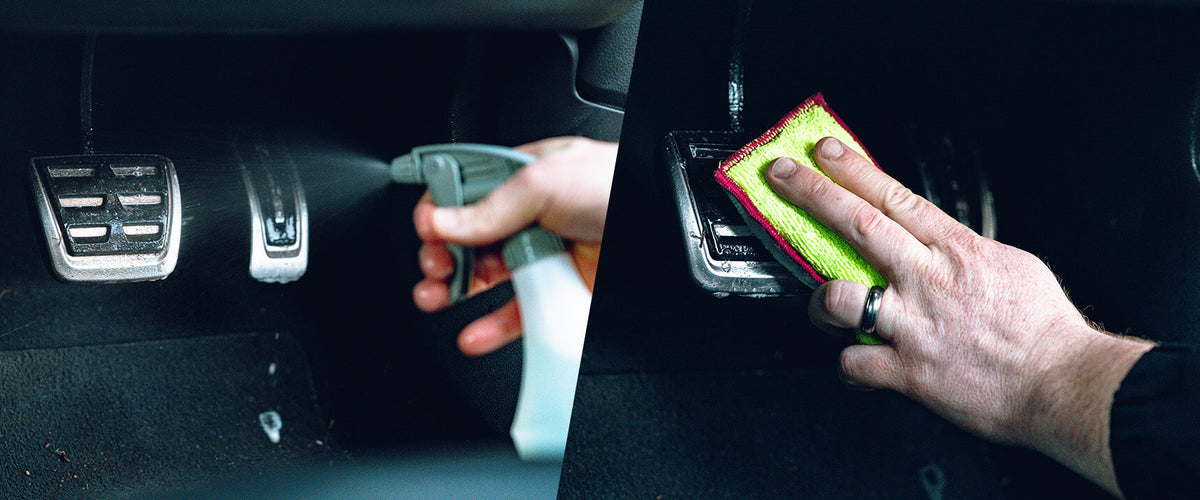
APC being applied and wiped on an interior trim surface
Common APC Dilution Mistakes
Recommended Starting Points for Logic APC
Logic APC is designed to provide versatility across a wide range of detailing tasks. As always, contamination level, surface type and cleaning frequency should influence the final dilution selected.
 Logic APC
Designed to deliver consistent cleaning performance across a wide range of surfaces and contamination types — from light maintenance to heavy degreasing — through controlled dilution.
- Versatile across interior and exterior applications
- Effective across a wide dilution range
- Economical in use — a little goes a long way
- Suitable for maintenance and deep cleaning tasks
Formulated for versatility across interior and exterior surfaces. One bottle, controlled dilution, consistent results.
How to Dilute APC Properly
Consistent dilution produces consistent results. Following a simple process every time removes guesswork and ensures you are using the correct ratio for the task.
Use our free Dilution Ratio Calculator to get exact product and water amounts for any bottle size and ratio — no mental arithmetic required.
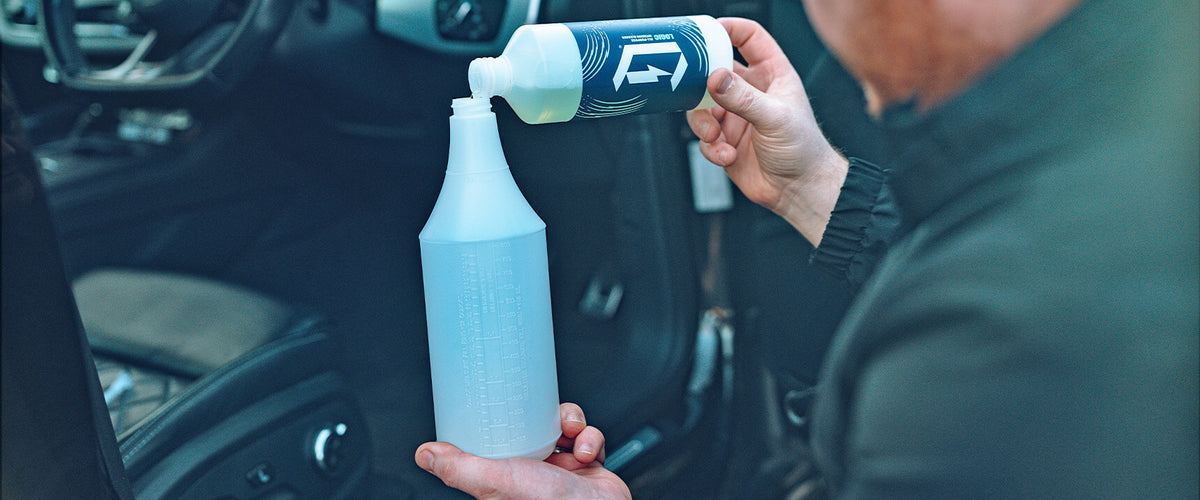
APC product being measured and mixed into a spray bottle
Frequently Asked Questions
What is the best APC dilution ratio?
Can APC damage plastics?
Can APC be used on interiors?
Can APC be used on leather?
Does stronger APC clean better?
What is the most common APC mistake?
Final Thoughts
APC is one of the most useful products in car detailing, but its versatility is also what causes many people to misuse it. A single ratio applied to everything rarely produces the best results from any of those tasks.
Understanding dilution ratios — and adjusting them to suit the surface, the contamination level, and the job at hand — allows you to clean more safely, reduce product waste, and achieve more consistent results every time.
The most effective detailers are not the ones using the most product. They are the ones using the right amount for the right job.
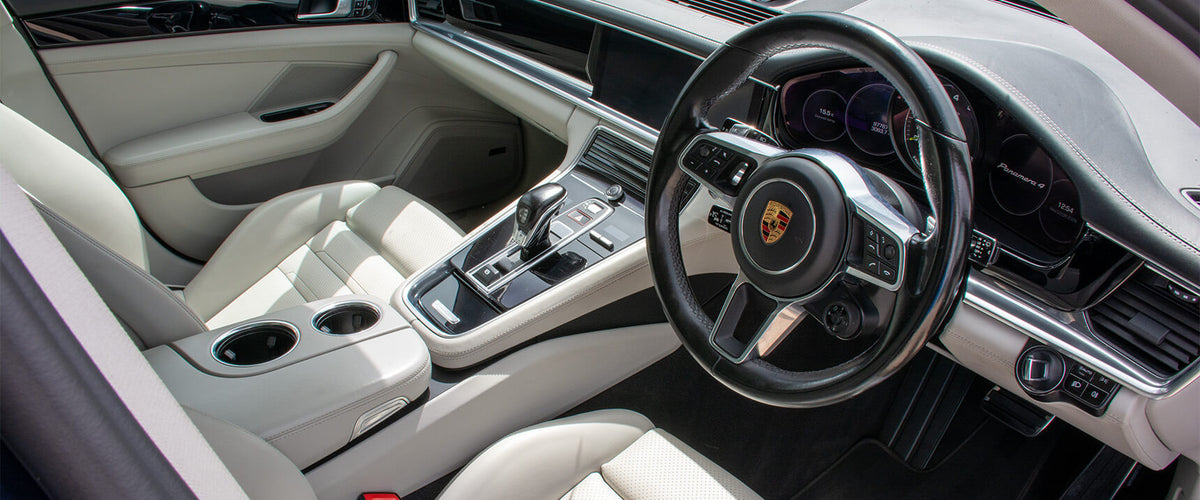
Clean interior or engine bay after APC treatment — showing the finished result
The strongest dilution is rarely the best dilution. Match your APC to the task, test on sensitive surfaces, and never let it dry. Use our free Dilution Ratio Calculator to get the maths right every time. If you also use snow foam in your wash process, see our guide on Snow Foam Dilution Ratios Explained.