



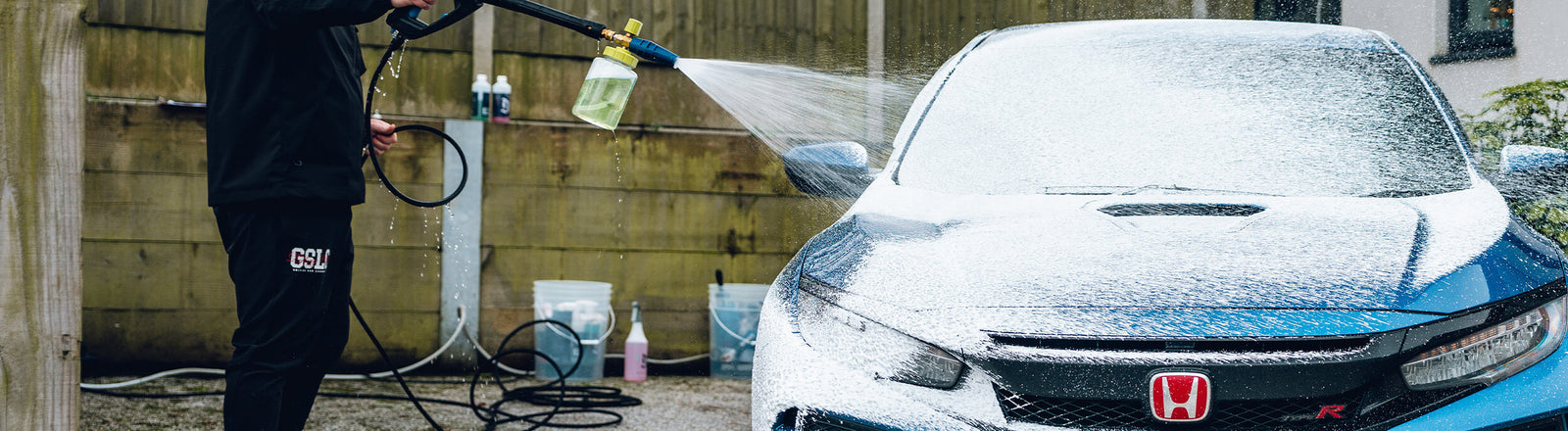
Snow Foam Dilution Ratios Explained Properly
Most people chase thick foam. That is the wrong goal. Understanding dilution ratios properly is one of the easiest ways to get safer, more consistent results from every wash.
Snow foam is one of the most misunderstood products in car detailing. Ask ten people how to dilute snow foam and you will often get ten different answers. Some people massively overuse product chasing thick foam, while others use so little that cleaning performance drops off completely.
The problem is that most people focus on how snow foam looks rather than how it actually performs.
Good snow foam is not about creating shaving cream for social media. It is about safely softening dirt, increasing lubrication, and reducing the risk of wash-induced marring before contact washing even begins. Understanding dilution ratios properly is one of the easiest ways to get better results from your snow foam.
Quick answer: Most snow foams are diluted around 1:5 to 1:15 — roughly 100–200ml of foam in a 1-litre lance bottle, topped up with water. Use a stronger mix for heavy winter grime and a weaker one for regular maintenance washes. Always add the foam to the water, not the reverse.
| Wash type | Ratio | Foam per 1L lance bottle |
|---|---|---|
| Light maintenance | 1:15 | ~65 ml |
| Regular wash | 1:10 | ~90 ml |
| Heavy / winter grime | 1:5 | ~165 ml |
What Does Snow Foam Actually Do?
Before worrying about ratios, it helps to understand the job snow foam is designed to perform. It is a pre-wash stage — not a replacement for a proper contact wash.
Contamination
Lubrication
Risk
Cleanly
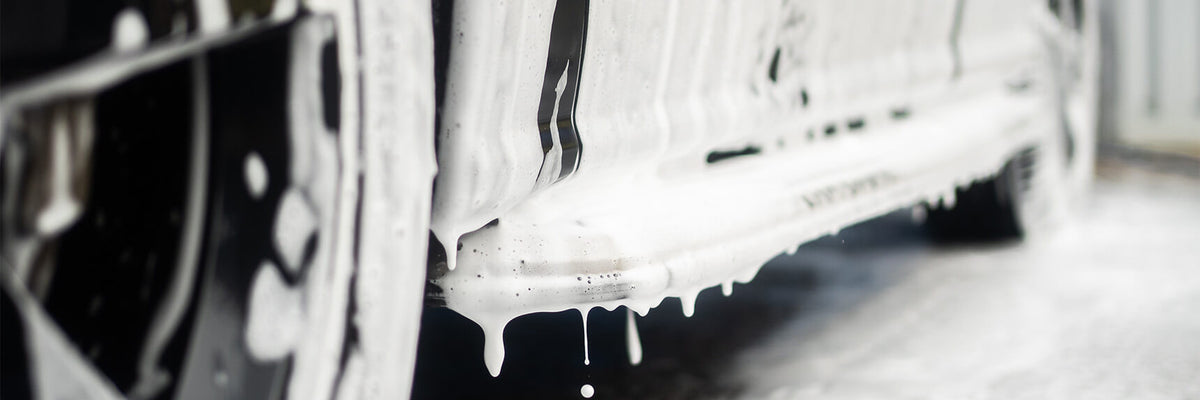
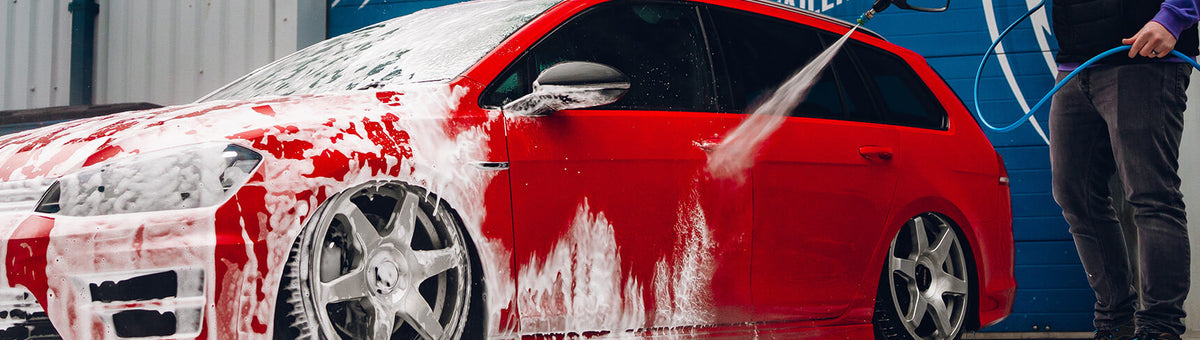
Snow Foam dwelling on a panel — showing cling and coverage
Products like Assault Snow Foam are designed to balance cling, cleaning ability, rinse behaviour, and lubrication — not simply create the thickest foam possible.
Thick Foam Does Not Mean Better Cleaning
This is probably the single biggest misconception in modern detailing. A snow foam can look incredibly thick, cling for ages, photograph brilliantly — while offering mediocre cleaning performance.
"More foam equals better cleaning." It is the assumption most people start with — and it is wrong almost every single time. Excessively thick foam is usually the result of too much product, not better formulation.
Overloaded lance bottles waste product and produce poorer rinse performance. The best setup cleans effectively, rinses cleanly, and works consistently — regardless of how photogenic it looks.
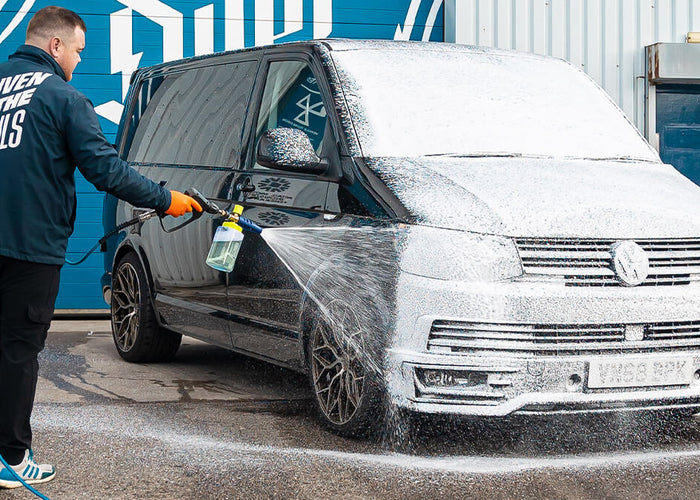
In many cases, excessively thick foam slides off panels too quickly, traps contamination unevenly, or becomes harder to rinse thoroughly. A foam that dwells properly and lubricates effectively will outperform a purely visual one every time.
Most people who overpour are chasing a look they have seen online. That look is often achieved by restricting lance airflow to produce heavier but less practical foam.
Good snow foam is not about creating shaving cream for social media. It is about safely preparing the surface before your wash mitt touches it.
Understanding Snow Foam Dilution Ratios
This is where confusion starts. When a snow foam recommends a 1:10 dilution, that means 1 part product to 10 parts water — making 11 total parts combined. It does not mean 10 total parts.
This is a common mistake that causes incorrect mixing. In a 1 litre foam lance bottle at 1:10, you need 90.9ml of snow foam and 909.1ml of water — not 100ml product to 900ml water. Small differences matter because they affect consistency and repeatability across every wash.

Measuring snow foam into a foam lance bottle
Use our free Dilution Ratio Calculator for any bottle size and ratio. Get exact product and water amounts every time — no maths required.
Why Your Foam Lance Setup Changes Everything
One of the reasons snow foam causes so much confusion is that foam lances add another layer of dilution. The bottle dilution is only part of the equation — actual panel dilution is affected by all of the following.
This is why copying somebody else's exact ratio online often produces completely different results. A setup producing thick foam on one pressure washer may look watery on another.
The only reliable approach is to start with a sensible dilution for your use case, observe the results on your own setup, and adjust methodically from there — rather than chasing numbers from someone else's rig.
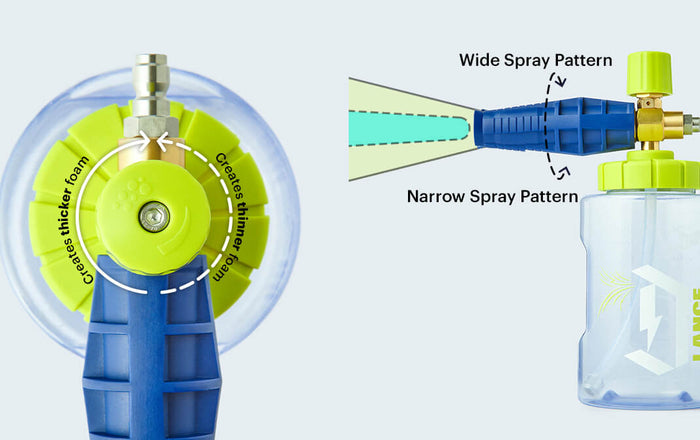
Typical Snow Foam Dilution Ratios
These are sensible starting points for most maintenance washes. The goal should always be to use the weakest effective dilution possible — this reduces waste, improves economy, and helps products rinse more cleanly.
| Use Case | Typical Ratio | Notes |
|---|---|---|
| Maintenance Wash | 1:10 to 1:15 | Suitable for regularly cleaned vehicles with protection in place |
| Winter Contamination | 1:5 to 1:10 | Heavier road film and salt buildup may warrant a stronger mix |
| Lightly Dusty Vehicle | 1:15 or weaker | Avoid over-cleaning — less chemistry needed on low contamination |
| Heavy Road Film | Stronger mix | Increase strength, allow longer dwell, then rinse thoroughly |
| Protected / Coated Vehicle | Often weaker | Coatings do much of the work — aggressive chemistry rarely needed |
Use the weakest effective dilution possible. Stronger chemistry rarely means better results — it often means more waste, higher cost per wash, and poorer rinse behaviour.
Common Snow Foam Mistakes
Using Too Much Product
Overloading a foam lance bottle rarely doubles cleaning performance. Usually it just burns through product faster. A properly formulated snow foam should not need half a bottle per wash to perform well.
Chasing Thick Foam
Foam thickness has become heavily exaggerated online. Good snow foam should dwell properly, lubricate the surface, and rinse cleanly. Excessively thick foam can slide off panels too quickly or trap contamination unevenly.
Ignoring Water Hardness
Hard water affects foam behaviour significantly. Two people using identical snow foam ratios can get completely different results depending on water quality, pressure washer output, and ambient temperature. Adjust rather than panic.
Not Adjusting for Maintenance Washing
A car washed weekly needs far less aggressive chemistry than a neglected vehicle cleaned every few months. Match your chemistry to contamination level — not habit. This is where most product waste happens.
Recommended Starting Points for Assault Snow Foam
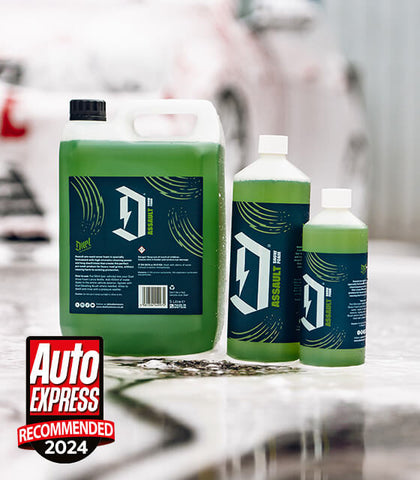
Assault Snow Foam is designed to provide strong cleaning performance while remaining easy to rinse and economical to use. As always, contamination level, weather, protection status, water hardness, and lance setup all influence final performance.

Assault Snow Foam
Formulated to balance cling, cleaning performance, and rinse behaviour. Not simply designed to create the thickest foam possible.
- Strong cleaning performance at correct dilution
- Easy to rinse — no stubborn residue
- Economical across a range of dilution strengths
- Suitable for maintenance and heavier washes
Regular cleans on a well-maintained vehicle. Use the weaker end to extend product life.
Road salt, heavy grime, and neglected vehicles. Allow longer dwell time and rinse thoroughly.
Coatings and sealants reduce contamination bonding. Lighter dilutions are usually more than enough.
Does More Snow Foam Mean Safer Washing?
Not necessarily. Safe washing comes from a combination of factors — not from raw foam thickness alone. Simply pouring more snow foam into a lance does not automatically reduce swirl marks.
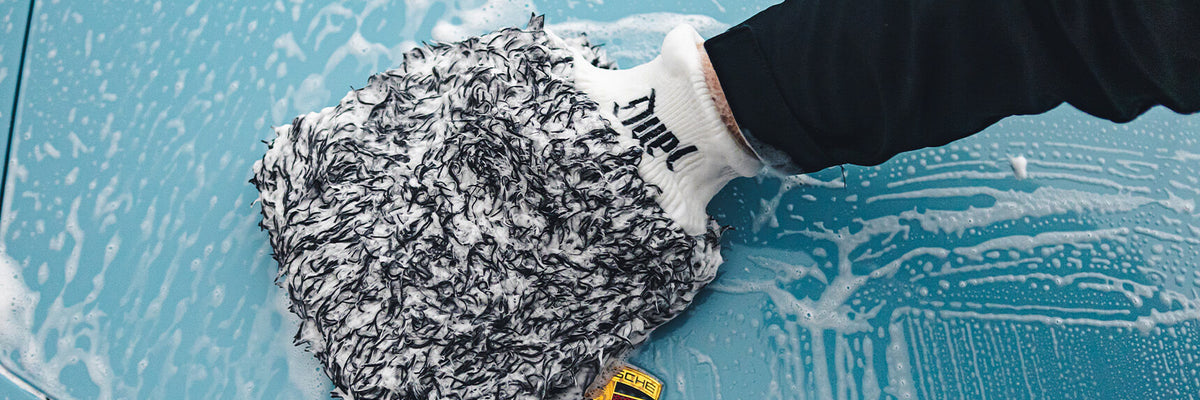
In many cases, technique matters far more than raw foam thickness. The detailers who get the best results are not the ones with the thickest foam — they are the ones with the most consistent and controlled process.
The obsession with maximum foam has convinced many people that stronger dilution always means better performance. In reality, proper dilution and good technique matter far more.
The obsession with maximum foam has convinced many people that stronger dilution always means better performance. In reality, proper dilution and good technique matter far more.
Real-World Snow Foam Mixing Examples
Small differences in measurement affect consistency and repeatability. This is exactly why a proper dilution calculator is worth using rather than eyeballing it at the lance bottle.
Use our free Dilution Ratio Calculator for any bottle size and ratio. Get exact product and water amounts every time — no maths required.
Final Thoughts
Snow foam should not be treated like a visual effect. Good snow foam is about controlled chemistry, safe pre-washing, lubrication, consistency, and efficient cleaning.
The obsession with maximum foam has convinced many people that stronger dilution always means better performance. In reality, proper dilution and good technique matter far more.
Most experienced detailers eventually realise the same thing: the best wash process is usually the most balanced one, not the most excessive.
Understand what your snow foam is actually doing, mix it correctly for your setup, and adjust based on contamination level — not on how it looks. Use our free Dilution Ratio Calculator to get the maths right every single time.
Frequently Asked Questions
What does a 1:10 snow foam dilution mean?
Does thicker snow foam clean better?
How much snow foam should I use?
Can you use too much snow foam?
Why does my snow foam look watery?
Does foam lance setup affect snow foam dilution?
Snow Foam Designed to Actually Clean
Assault Snow Foam is formulated to balance cling, cleaning performance, and rinse behaviour — not just look good on camera.