Duel Autocare
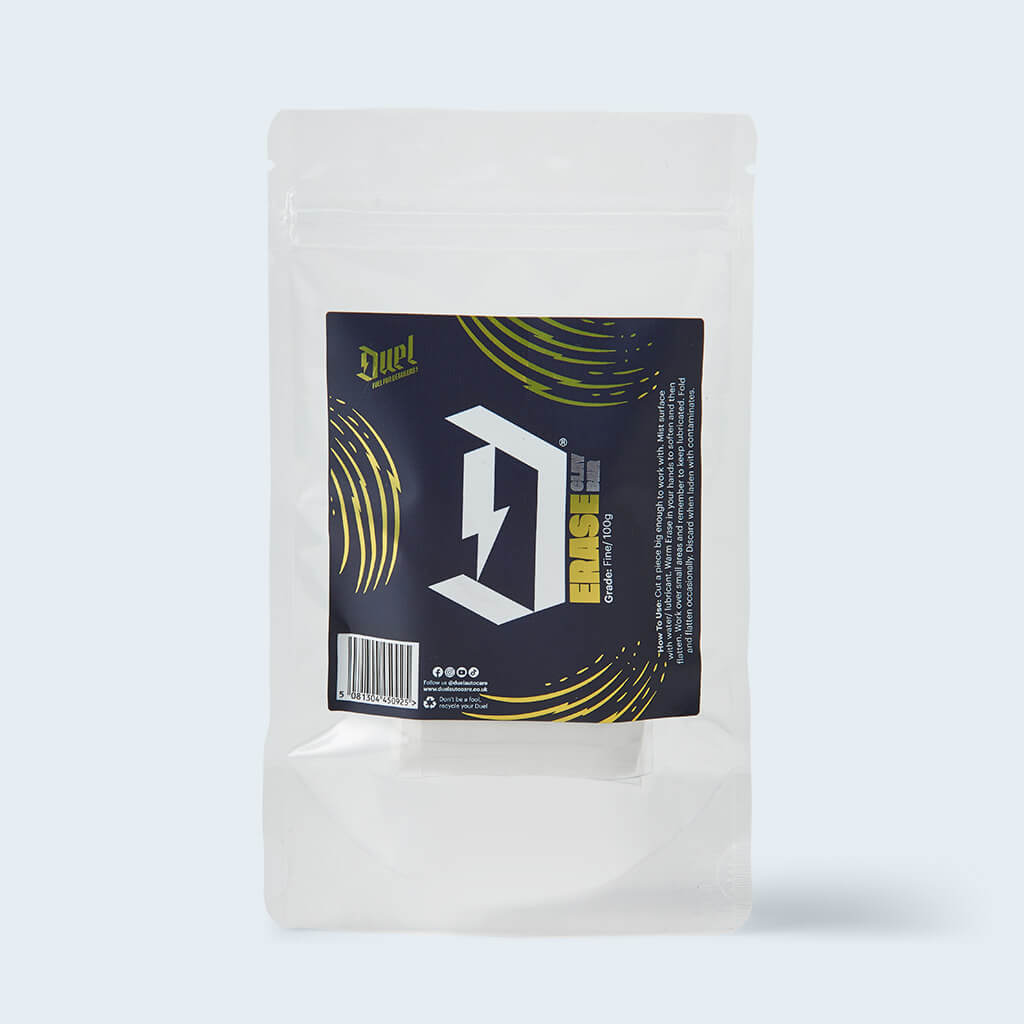
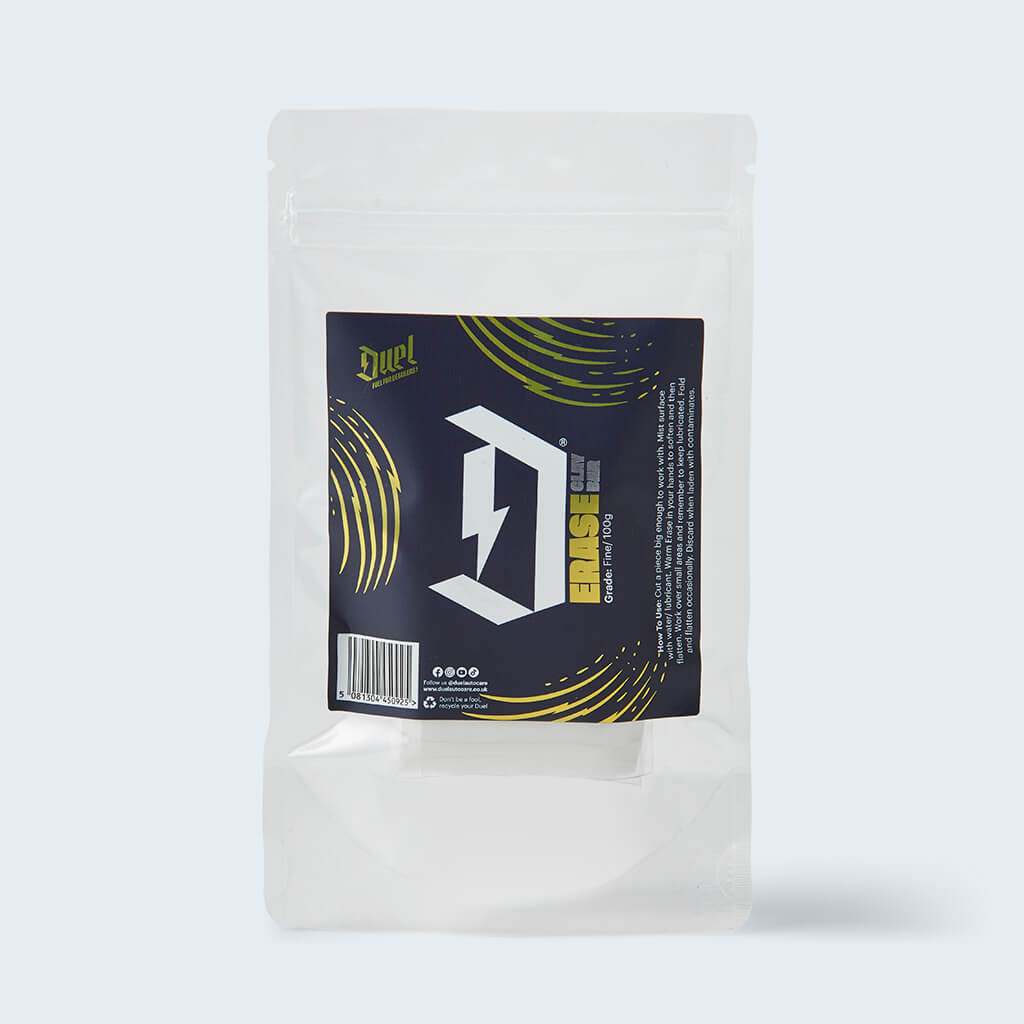
Erase Clay BarFine Grade Detailing Clay For Paint, Glass & Wheels
Wash your car, dry it, then run your fingertips over the bonnet through a thin plastic bag. If the surface feels gritty, those are particles of contamination bonded to the lacquer. Washing alone cannot remove them. Erase Fine Grade Clay can.
At A Glance
Why Claying Matters
Washing lifts loose dirt. Claying lifts what washing leaves behind: industrial fallout, rail dust, overspray and tree sap that has hardened onto the lacquer. These particles are bonded to the surface and no shampoo will shift them.
Wax, sealant and ceramic coatings bond to the lacquer, not to contamination sitting on top of it. Clay first, protect second. The difference in how long protection lasts and how evenly it bonds is not subtle.
Contamination does not stop at the door panel. Clay your windscreen and your wipers clear better. Clay your alloys and they stay cleaner between washes. One bar, three surfaces, one method.
Fold the bar to a clean face after each panel and it lasts through multiple sessions. The only rule: if you drop it, throw it away. Grit picked up off the floor will scratch paint on the next pass.
What Does A Clay Bar Actually Remove?
Paint carries two types of contamination. Loose contamination — road film, dust, brake dust that has settled but not bonded — sits on the surface and comes off in a wash. Bonded contamination has fused onto the lacquer itself. Industrial fallout from nearby roads and railways, overspray from construction, tree sap and insect deposits that have baked through summer: once these have bonded, they are chemically attached and no amount of shampoo will shift them. The paint looks clean and still feels like sandpaper.
A clay bar works by mechanical means. The bar is a soft resin that, when pressed lightly against a wet panel and moved in straight lines, deforms around raised particles and grips them. As the bar slides, those particles are pulled off the lacquer and embedded into the clay. The panel goes from feeling rough to feeling smooth, usually within a few passes. That smooth feeling is paint with nothing standing proud of the surface — ready for a coat of wax or sealant to bond properly.
Chemical decontamination with an iron fallout remover and a tar remover dissolves some of what is there before the clay arrives. Less for the bar to lift means a cleaner bar, a longer-lasting bar, and a better result. The sequence is always: chemical first, clay second, protect third.
"Put your hand in a plastic bag and run your fingertips over the bonnet. If you can feel it, the clay will remove it."
— Duel AutocareIs It Right For You?
- Paint that feels gritty or rough after washing
- Before applying wax, paint sealant or a ceramic coating
- After iron fallout and tar removal, as the final decontamination step
- Glass that smears under the wipers despite being freshly cleaned
- Alloys and chrome with bonded brake dust and rail dust
- Anyone who details properly and runs a full decontamination twice a year
- The paint already feels glass smooth — do the bag test first and only clay what needs it
- You have swirl marks or deep scratches — clay decontaminates, it does not correct paint defects; that needs machine polishing
- You are working on matte or satin paint — clay can alter the sheen on non-gloss finishes
- Gloss painted and lacquered panels
- Glass (windscreen, side windows, rear glass)
- Alloy, chrome and painted wheels
- Plastic trim (lightly, with plenty of lubricant)
- Matte or satin paint finishes — clay can alter the sheen
- Rubber seals and weatherstripping — clay can pull and degrade
- Dry surfaces — always apply lubricant to the panel first
- A bar that has been dropped — discard it immediately
How To Use Erase Clay Bar
Apply Toxin iron fallout remover and BlackJack tar remover before the clay. Dissolving contamination chemically first means the bar has less to lift, stays cleaner, and lasts longer.
Clay on a dirty car means the bar picks up loose grit, and that grit scratches the surface on the next pass. Wash thoroughly and dry the panels before you start.
5 to 10ml of Bahama Blue shampoo in a 947ml spray bottle topped up with water. Shake it and set aside. It works as well as a bottled clay lube at a fraction of the cost.
Work it between your palms until it warms and softens. Shape it into a flat disc roughly the size of your palm. You want a flat working face, not a ball.
Soak a section of the panel with lubricant, then glide the clay back and forth in straight lines with no downward pressure. It will drag at first, then go smooth — smooth means that section is done. Add more lubricant the moment the clay starts to grab or squeak.
Fold the bar to a clean face after each section. Wipe the panel dry and protect immediately — the surface is now bare and will pick up contamination again without wax, sealant or coating over it.
Do You Even Need To Clay It?
Not every car needs claying every time. The bag test tells you in thirty seconds. Wash and dry the car, put your hand in a thin plastic bag and run your fingertips over the bonnet and roof. The bag amplifies texture that bare skin misses entirely.
| What you feel | What it is | What to do |
|---|---|---|
| Glass smooth | No bonded contamination — the paint is clean at the surface | Skip claying. Move straight to protection if you are waxing or sealing. |
| Slightly gritty | Light contamination, common on cars that live outside | One session with Erase will clear it. Chemical decontamination first helps, though it is not mandatory at this level. |
| Gritty with rough bumps | Moderate contamination — iron fallout, rail dust or hardened organic deposits | Use Toxin and BlackJack first to dissolve what you can, then clay. The bar will last longer and the result will be better. |
| Very rough, almost rasping | Heavy contamination — common near industry, main roads or railways | Chemical decontamination first, then clay. Expect the bar to load quickly — fold to a clean face often and have a second piece ready if needed. |
How often? Once or twice a year suits most cars. A car kept in a garage on a quiet street may go longer. A car parked outside near a main road, a railway line or an industrial estate may need it more. Touch is the guide, not the calendar.
Frequently Asked Questions
What is a clay bar and what does it do?
How do you use a clay bar on a car?
Do I need to buy a clay bar lubricant?
How often should I clay my car?
Can a clay bar damage or scratch my paint?
Can I use a clay bar on glass and wheels?
Storage & Care
Technical Specification
| Product type | Detailing clay bar |
| Grade | Fine |
| Weight | 100g |
| Colour | White/grey |
| Supplied | Single bar in resealable packaging |
| Suitable for | Gloss paint, lacquer, glass, alloy wheels, chrome |
| Use with | 5 to 10ml Bahama Blue shampoo in a 947ml spray bottle of water, as lubricant |
| Step in process | Physical decontamination, after iron fallout and tar removal |
| SKU | EraseCla/FineGrad |