



Interior
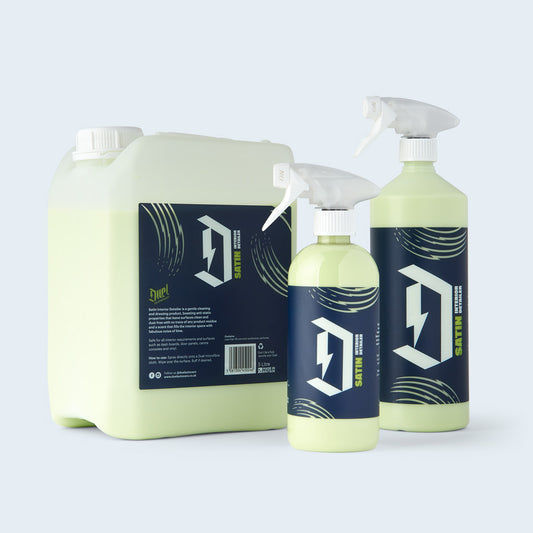



The inside of a car sees more daily contact than almost any surface you own — hands on the wheel, shoes on the mats, bags on the seats, fingertips on the touchscreen. Dust settles on every horizontal surface, fabric holds onto grime and odour, and glass picks up haze and smear from inside the cabin. None of it is difficult to deal with, but it needs the right products used in the right order.
Duel’s interior range covers the full process: hard surface cleaning and protection, fabric care, glass cleaning, and specialist tools for the jobs a vacuum alone can’t finish. Everything is designed to be quick and straightforward — a full interior clean shouldn’t take more than 30–45 minutes once you have the right products to hand.
The Interior Cleaning Process
A complete interior detail follows a logical order. Working through it correctly means you’re not cleaning areas twice or spreading contamination from one surface to another.
Step 1 — Pet hair and loose debris first
If pets travel in the car, start with the pet hair remover before any cleaning. Rubber over fabric lifts embedded hair that a vacuum misses, bundling it for easy removal. Vacuum the interior afterwards to remove loose debris from seats, carpets, and mats before any liquid products go on.
Step 2 — Clean hard surfaces
Work top to bottom through the cabin — dashboard, door cards, centre console, gear surround, door shut areas. Interior cleaner lifts fingerprints, dust, and general grime from plastic, vinyl, and rubber trim. Use a soft detailing brush for vents, seams, and any textured surfaces where a cloth alone doesn’t reach.
Step 3 — Clean fabric surfaces
Fabric care comes after hard surfaces so you’re not dripping product onto already-cleaned areas. Diluted Logic All Purpose Cleaner with an interior scrubbing pad or finger scrub mitt lifts ground-in grime from seat fabric, carpets, and boot liners without over-wetting the material.
Step 4 — Dress and protect hard surfaces
Once hard surfaces are clean and dry, interior dressing applies a protective finish that repels dust and conditions plastic and vinyl trim. Apply dressing after cleaning, not before — dressing over contamination seals grime in rather than protecting the surface.
Step 5 — Glass last
Glass is always last. Cleaning the interior glass before everything else means product overspray from subsequent stages lands on glass you’ve just cleaned. Glass cleaner on a dedicated glass cloth gives a streak-free result on windscreens, side windows, and mirrors.
Shop By Interior Need
- Interior Cleaner — dashboards, door cards and hard interior surfaces
- Interior Dressing — protection and finish for plastic and vinyl trim
- Fabric Care Products — seats, carpets, boot liners and mats
- Pet Hair Remover — embedded hair a vacuum leaves behind
- Glass Cleaner and Glass Cloths — streak-free windows and mirrors
- Scrubbing Pads and Scrub Mitts — the tools that pair with cleaner for agitated fabric cleaning
- Detailing Brushes — soft and stiff options for vents, seams and tight areas
Interior Cleaning FAQs
How often should I clean my car interior?
For most cars driven daily, a light interior clean every two to four weeks keeps surfaces manageable and prevents grime from building up in fabric and trim. A more thorough clean — covering fabric, glass, and a dressing application — every one to two months is enough for most people. Cars that carry dogs, children, or food regularly benefit from more frequent attention.
Where should I start when cleaning my car interior?
Pet hair removal and vacuuming first, then hard surfaces top to bottom, then fabric, then dressing, then glass last. This order avoids cleaning the same area twice — working glass before the dashboard, for example, means product from subsequent stages will settle on freshly cleaned glass and need doing again.
Can I use the same product on fabric and hard surfaces?
Yes — Logic All Purpose Interior Cleaner covers both. It’s a concentrate that you dilute differently depending on the task: 1:10 for general hard surface cleaning and light fabric maintenance, 1:5 for more heavily soiled fabric, carpets, or mats. It’s not recommended for continuous use on leather, where a dedicated leather cleaner should be used instead.
What’s the difference between interior cleaner and interior dressing?
Cleaner removes contamination. Dressing protects and finishes the surface after cleaning. They work in sequence — clean the surface, allow it to dry, then apply dressing. Applying dressing to a dirty surface locks in grime rather than protecting the material. Satin Interior Dressing is a 2-in-1 that combines both steps for quick maintenance sessions.
How do I get rid of interior odours?
Odours in cars usually come from fabric — seats, carpets, and headlining that have absorbed spills, food, moisture, or pet smell over time. Cleaning the fabric thoroughly with Logic and an interior scrubbing pad removes the source rather than masking it. Once the fabric is clean, a Duel car air freshener maintains a fresh scent between cleans. Persistent odours from spills or pet accidents may need an enzyme-based odour neutraliser rather than a cleaner alone.
Do I need a detailing brush for interior cleaning?
Not for every surface, but they make a significant difference for vents, seams, steering column surrounds, and any textured trim where a cloth can’t reach. A soft detailing brush with interior cleaner is the fastest way to clear dust from air vents without pushing it further into the mechanism. The stiff brush is better for door shuts, seat rails, and rubber channels where grime is heavier.
A clean interior makes every drive better.
The outside of a car makes the first impression, but the interior is where every journey actually happens. A clean, well-maintained cabin is more comfortable, more pleasant to be in, and easier to keep on top of with regular short sessions than occasional deep cleans. Browse the full range below, or use the links above to go straight to the category you need.
Interior Care FAQs
Everything you need to know about cleaning and protecting your car's interior.
Where should I start with interior detailing?
Clean first, then protect. Use an interior cleaner on hard surfaces and a fabric-safe cleaner on seats and carpets, then follow up with an interior dressing on plastic trim once everything's dry.
Can I use the same cleaner on both fabric and hard surfaces?
Some products, like Logic All Purpose Interior Cleaner, are formulated to be safe on both. Always check the product label if you're unsure about a specific surface.
How often should I clean my car's interior?
This depends on how much the car is used, but a quick clean every couple of weeks keeps dirt from building up and makes each session faster than leaving it to pile up.
Do I need special tools, or just a cloth?
For light dust, a microfibre cloth is usually enough. For anything ground-in — fabric, vents, seams — a scrubbing pad, detailing brush or finger mitt does a better job than a cloth alone.
What's the difference between a cleaner and a dressing?
A cleaner removes dirt and grime. A dressing is applied afterwards to protect the surface and give it a finished look — the two work together rather than replacing each other.
A clean interior changes how every journey feels.
You notice the inside of your car far more than the outside, so it's worth getting right. Start with whichever collection matches what you're dealing with today, and build up a routine from there.