



Interior Dressing
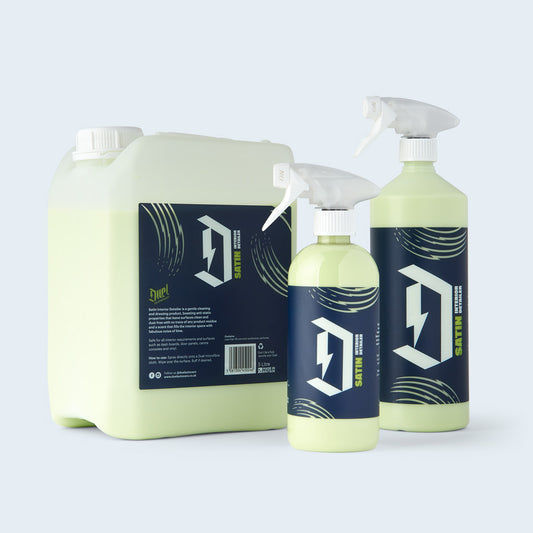

Satin Interior Dressing & Cleaner is a 2-in-1 formula that cleans and dresses hard interior surfaces in a single step. The gentle formula lifts light surface grime while leaving a clean, protected finish on dashboards, door cards, plastic trim, rubber seals, and more.
The anti-static properties help repel dust after application, so the interior stays cleaner for longer between maintenance sessions. No greasy or sticky residue, just a consistent satin finish with a fresh lime scent. Ready to use straight from the bottle — no dilution, no fuss.
Why Use Interior Dressing?
Car interiors take a constant battering. UV light fades plastic and rubber, dust settles on every surface, and the wear of daily use leaves dashboards looking dull. An interior dressing addresses all of this in one step.
Beyond appearance, dressing helps condition and protect hard interior surfaces. Untreated plastic and rubber can dry out and become brittle over time, particularly on the dashboard and top of the door cards where sun exposure is highest. A regular application helps keep these materials looking their best and more resistant to discolouration.
It works best as the final step after an interior cleaner — applying dressing over dust or residue locks contamination in rather than protecting the surface beneath.
What Can Satin Interior Dressing Be Used On?
Satin is designed for hard interior surfaces. Safe to use on dashboards, door cards and door trim, centre consoles, plastic and vinyl trim panels, air vents, gear selector surrounds, steering column trim, and boot trim.
Avoid applying to pedals, seat fabric, leather, or the steering wheel grip — anywhere that a smooth, low-friction finish could reduce control or feel underfoot.
Interior Dressing FAQs
Does interior dressing leave a greasy finish?
Not with Satin. The formula is specifically designed to avoid the sticky, greasy residue that some interior products leave behind. The result is a clean, satin finish that doesn’t attract dust or feel tacky to the touch. The anti-static properties actively help repel dust after application.
How do I apply interior dressing?
Spray a small amount of Satin directly onto the surface or onto a clean microfibre cloth, then wipe evenly across the panel. Work one section at a time, then buff off any excess with a dry cloth. Apply after cleaning with an interior cleaner for the best result.
How often should I use interior dressing?
Once a month is a reasonable maintenance schedule for most cars. If your car sits in direct sun regularly or you drive daily, you may notice the finish dulling slightly faster and want to apply it more frequently. A quick wipe-down takes only a few minutes once the surfaces are clean.
Can I use interior dressing on rubber seals and trims?
Yes — Satin is safe on rubber door seals, rubber trim surrounds, and similar surfaces. Regular use helps keep rubber supple rather than allowing it to dry out and crack over time, particularly on older vehicles.
Is interior dressing safe on all plastics?
Satin is designed for the hard plastic and vinyl surfaces found inside most vehicles. If you’re using it on an unusual or delicate surface for the first time, apply a small amount to a less visible area first to check compatibility.
What’s the difference between interior cleaner and interior dressing?
An interior cleaner removes dirt, grime, and contamination from surfaces. An interior dressing protects and finishes the surface after cleaning. They work together as part of a complete interior detail — clean first, dress second. Satin combines both functions into one product for quick maintenance sessions.
A cleaner interior makes every drive better.
A well-kept interior isn’t just about appearance. Dust-free surfaces, conditioned trim, and a fresh scent all contribute to how the car feels to be in. Satin Interior Dressing & Cleaner makes maintenance straightforward enough to do regularly. For a complete interior detail, pair it with an interior cleaner and our interior cleaning range.
Interior Dressing FAQs
Everything you need to know about dressing and protecting your vehicle's interior.
What does interior dressing do?
It protects dashboards, door cards and plastic trim from UV damage and everyday wear, while leaving a clean, satin finish that isn't greasy or overly glossy.
When should I use interior dressing?
Apply it after cleaning, once surfaces are completely dry. Dressing over dirty or damp trim will trap residue rather than protect it.
Will it leave a greasy or slippery finish?
No — Duel's dressings are formulated for a natural, non-greasy satin finish. They're designed to protect, not to make surfaces look wet or feel slick.
How often should I dress my interior?
Every few weeks is a good starting point for daily drivers, though this depends on sun exposure and how often the car is cleaned.
Is it safe to use near the steering wheel or pedals?
It's best kept away from contact points like the steering wheel, pedals and gear knob, where a slicker surface could affect grip and safety.
What's the difference between interior dressing and interior cleaner?
Interior cleaner removes dirt, dust and grime from the surface. Interior dressing is applied afterwards to protect and finish it — the two work as a pair, not a substitute for each other.
A cleaner interior makes every drive better.
Dressing is the finishing touch — the step that makes a freshly cleaned interior look cared for, not just wiped down. Pair it with an interior cleaner for the full process, and keep fabric seats and carpets looking just as good with our fabric care products.